Don’t Wait Until Renewal: How to Prepare for Your Insurance Renewal in Today’s Market
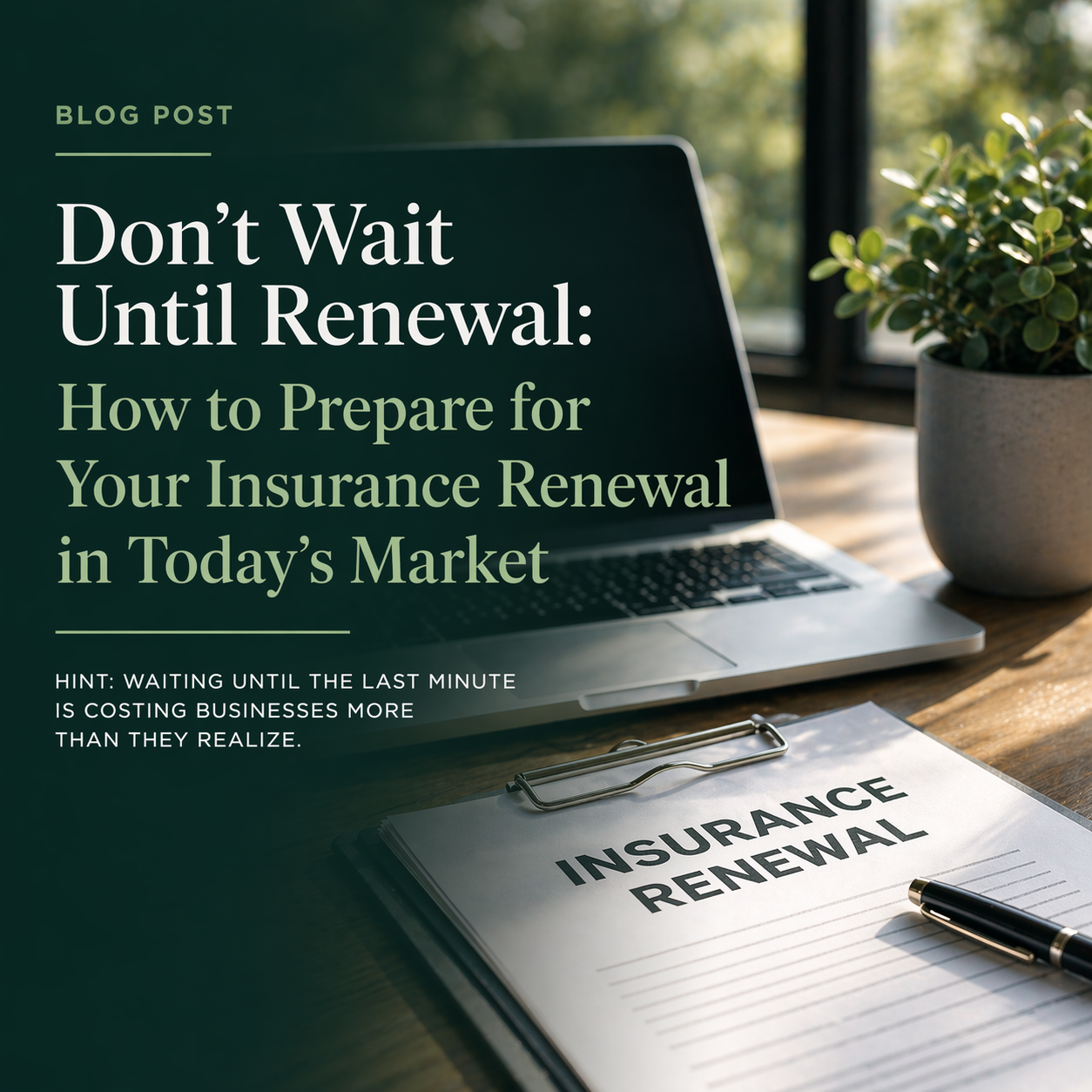
For many businesses, insurance renewal is treated as a once-a-year task—something to review quickly when the paperwork comes in. But in today’s evolving market, that approach is costing companies more than they realize.
Rising premiums, tighter underwriting, and increased scrutiny from carriers mean one thing: waiting until the last minute is no longer a strategy—it’s a risk.
If you want better outcomes at renewal, preparation needs to start well before your policy expires.
Why Timing Matters More Than Ever
The insurance market in 2026 is more complex than it was just a few years ago. Carriers are asking more questions, requiring more documentation, and taking a closer look at risk profiles before offering terms.
When businesses delay the renewal process, they limit their options. Less time means:
- Fewer opportunities to explore alternative carriers
- Reduced negotiating power
- Increased likelihood of accepting higher premiums or unfavorable terms
In short, waiting puts you in a reactive position—when what you really need is a proactive strategy.
Start the Process Early
One of the most important steps you can take is simple: start early.
Ideally, businesses should begin reviewing their coverage 90–120 days before renewal. This allows enough time to:
- Gather updated information
- Address potential concerns
- Explore multiple coverage options
Early preparation signals to carriers that your business is organized, intentional, and lower risk—something that can positively influence pricing and terms.
Review What’s Changed in Your Business
Your insurance coverage should reflect your current operations—not where you were a year ago.
Have you:
- Added new locations?
- Purchased equipment?
- Expanded services?
- Increased staff?
Even small changes can impact your exposure. If your policy hasn’t been updated to reflect these shifts, you could be underinsured—or paying for coverage you no longer need.
A thorough review ensures your policy evolves alongside your business.
Update Your Property and Asset Valuations
With construction and replacement costs continuing to fluctuate, outdated valuations are one of the most common issues we see.
If your property values haven’t been reviewed recently, your coverage limits may not align with today’s costs—leaving you exposed in the event of a loss.
Taking time to reassess valuations now can prevent significant gaps later.
Evaluate Your Risk Management Practices
Carriers aren’t just looking at your coverage—they’re evaluating how you manage risk.
Strong internal practices can make a difference in how your business is perceived and priced. This includes:
- Safety protocols
- Cybersecurity measures
- Employee training
- Claims history
Improving or documenting these efforts ahead of renewal can strengthen your position and potentially lead to better outcomes.
Work With an Advisor—Not Just a Policy
Perhaps the most important step is working with a team that takes a strategic approach.
Insurance shouldn’t be a last-minute transaction. It should be a conversation—one that helps you understand your exposures, identify gaps, and build a plan that aligns with your business goals.
A proactive advisor will guide you through the process, advocate on your behalf, and ensure you’re making informed decisions—not rushed ones.
The Bottom Line
In today’s market, the businesses that get the best results at renewal aren’t the ones who wait—they’re the ones who prepare.
Starting early, reviewing your operations, and taking a strategic approach can help you avoid unnecessary costs, reduce risk, and secure the coverage your business truly needs.
Latest insights and trends





Let’s Build Your Protection Strategy