Flood Risk Reality Check: Are You More Exposed Than You Think?
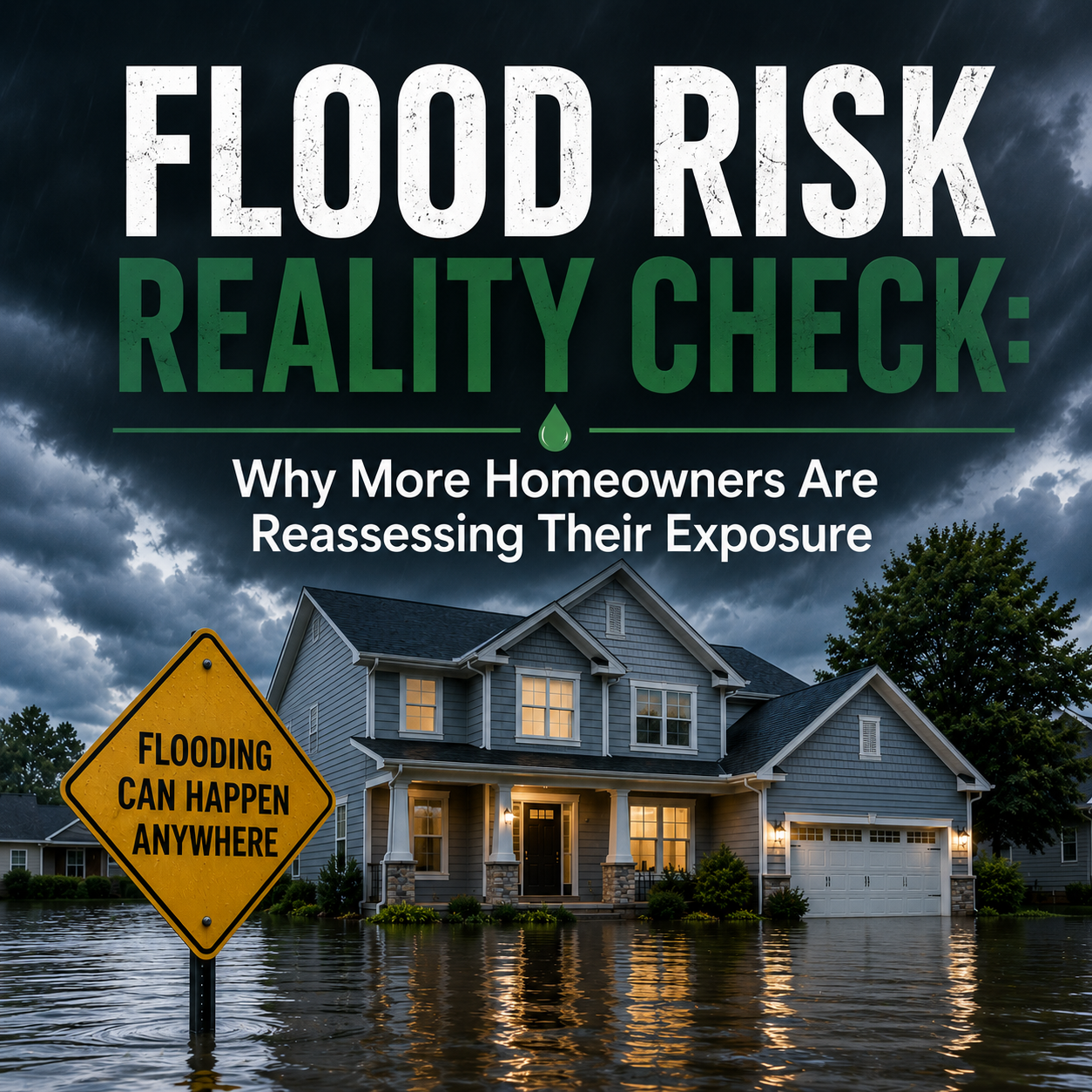
Flood Risk Reality Check: Why More Homeowners Are Reassessing Their Exposure
When most people think about flood insurance, they picture coastal communities, hurricanes, and homes located directly beside rivers or lakes. As a result, many homeowners assume flood coverage isn't something they need to worry about.
The reality is much different.
In recent years, flooding has become one of the most common and costly natural disasters in the United States. Heavy rainfall events, flash floods, overwhelmed drainage systems, and changing weather patterns have caused significant damage in areas that historically experienced little to no flooding.
As a result, more homeowners are taking a closer look at their flood exposure—and discovering they may be more vulnerable than they realize.
The Biggest Flood Insurance Myth
One of the most common misconceptions among homeowners is that their standard homeowners insurance policy covers flood damage.
In most cases, it does not.
While homeowners insurance typically covers damage caused by wind, fire, hail, and certain water-related events, flood damage resulting from rising water is generally excluded.
That means if heavy rainfall causes water to enter your home, a nearby creek overflows, or storm runoff floods your property, the repairs may not be covered under a standard homeowners policy.
Many homeowners don't learn this distinction until after a loss occurs.
Flooding Isn't Just a Coastal Problem
Flood risk has expanded far beyond traditional high-risk areas.
Today, flooding can occur due to:
- Intense rainfall events
- Urban development and drainage issues
- Overflowing stormwater systems
- Tropical weather systems moving inland
- Slow-moving thunderstorms
- Saturated ground conditions
In many cases, just a few inches of water can cause thousands of dollars in damage to flooring, drywall, electrical systems, furniture, and personal belongings.
The question is no longer, "Do I live near water?"
The better question is, "Could water reach my home during a major storm?"
Why More Homeowners Are Reassessing Their Risk
Weather patterns continue to evolve, and many areas are experiencing heavier rainfall events than they did just a decade ago.
At the same time, population growth and development have increased pressure on drainage infrastructure. New roads, parking lots, and construction projects can alter how water flows through a community, creating flood concerns in places that previously experienced few issues.
For homeowners, this means historical flood experience is no longer the only factor to consider.
Just because a property hasn't flooded before doesn't mean it won't flood in the future.
The Financial Impact of Flood Damage
Flood losses can be financially devastating.
Even relatively minor flooding can require:
- Drywall replacement
- Flooring repairs
- Mold remediation
- Electrical work
- Furniture replacement
- Temporary housing expenses
Without flood insurance, these costs typically become the homeowner's responsibility.
Many families are surprised to learn how quickly expenses add up after a water event.
A Proactive Approach to Risk Management
The goal of flood insurance isn't to create fear—it's to provide protection and peace of mind.
A proactive risk assessment helps homeowners understand their actual exposure rather than relying on assumptions. Factors such as property location, elevation, drainage patterns, local development, and weather trends can all influence risk levels.
This is why working with a local independent agent or Risk Advisor is so valuable. Rather than making decisions based solely on flood zone maps, they can help evaluate your overall exposure and determine whether additional protection makes sense for your situation.
Don't Wait Until the Forecast Changes
Flood coverage typically cannot be added after a storm is approaching. By the time severe weather is in the forecast, your options may be limited.
That's why the best time to evaluate flood exposure is before you need coverage—not after.
Ready for a Flood Risk Review?
If you've never reviewed your flood exposure—or if it's been several years since your last assessment—now is the perfect time to start.
Contact one of our Risk Advisors today for a comprehensive policy review. We'll help you evaluate your flood risk, identify potential coverage gaps, and determine whether additional protection is right for your home and your family.
Latest insights and trends





Let’s Build Your Protection Strategy