How to Build a Business Continuity Plan
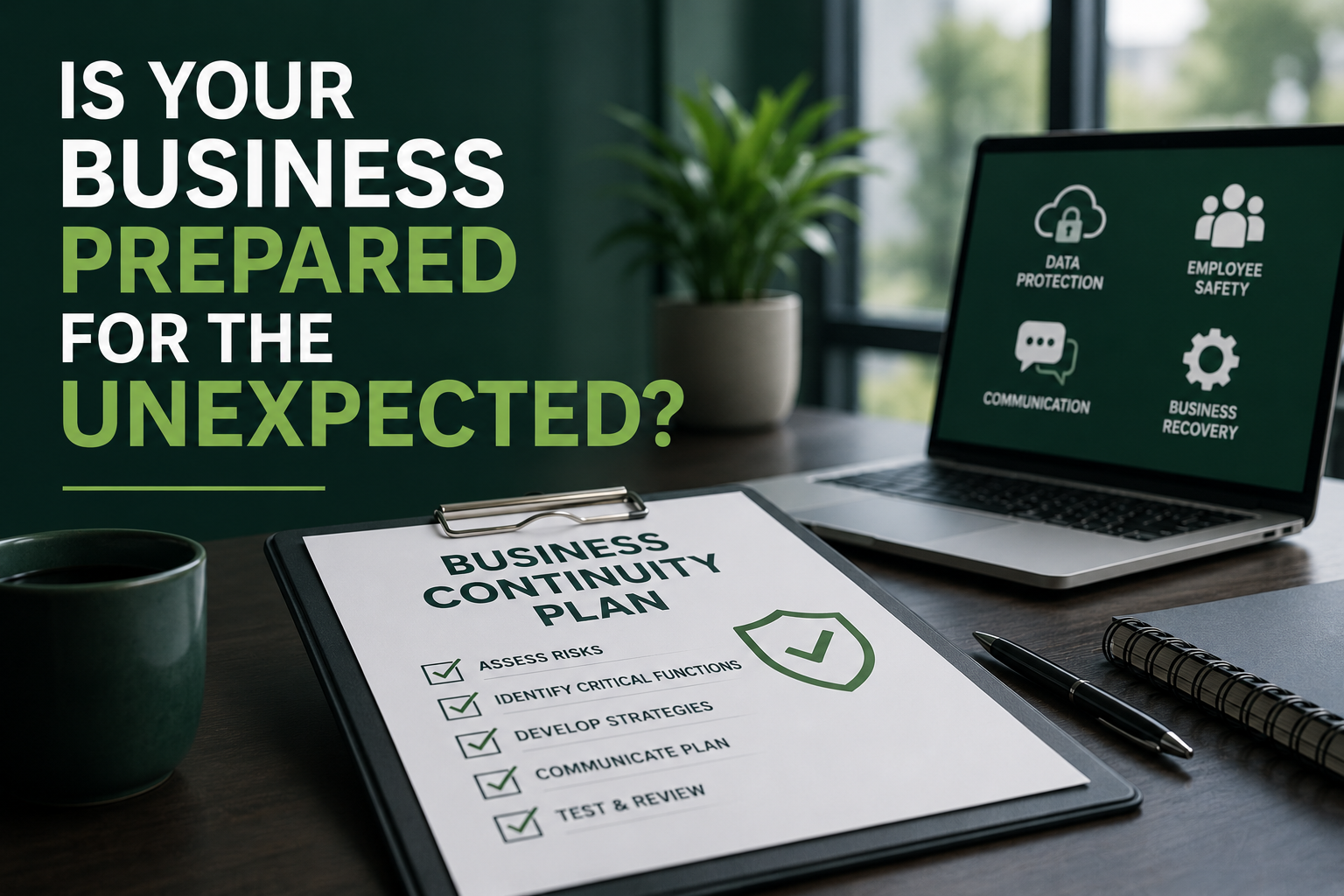
Every business owner hopes they'll never experience a major disruption. But whether it's a severe storm, cyberattack, fire, equipment failure, or extended power outage, unexpected events have the potential to bring business operations to a standstill.
The question isn't whether disruptions can happen—it's whether your business is prepared when they do.
Many organizations invest significant time protecting their physical assets through insurance but spend far less time planning how they'll continue serving customers if normal operations are interrupted. That's where a business continuity plan becomes invaluable.
A well-designed business continuity plan helps your organization respond quickly, recover efficiently, and reduce financial losses while protecting employees, customers, and your reputation.
What Is a Business Continuity Plan?
A business continuity plan is a documented strategy that outlines how your business will continue operating during and after an unexpected disruption.
Rather than reacting in the middle of a crisis, a continuity plan provides clear guidance for maintaining essential operations, communicating with employees and customers, protecting important data, and restoring normal business functions as quickly as possible.
Think of it as your organization's roadmap for navigating uncertainty.
The stronger your plan is before an emergency, the more resilient your business will be afterward.
The Risks Businesses Face Today
Business interruptions no longer come from just one source.
Today's organizations face a growing list of operational threats, including:
- Severe weather and natural disasters
- Fires and water damage
- Cyberattacks and ransomware
- Power outages
- Supply chain disruptions
- Equipment failures
- Employee injuries or workforce shortages
- Utility interruptions
- Vendor disruptions
- Public health emergencies
Any one of these events has the potential to temporarily stop operations and impact revenue.
Preparing for multiple scenarios—not just one—is the foundation of effective risk management.
Identify Your Critical Business Functions
The first step in building a continuity plan is determining which parts of your business are absolutely essential.
Ask yourself:
- What services must continue without interruption?
- Which employees perform mission-critical functions?
- What technology does your business rely on every day?
- Which vendors or suppliers are essential to operations?
- How long could your business function without access to your building?
Understanding these priorities allows you to focus resources where they matter most.
Protect Your Data
For many businesses, digital information has become just as valuable as physical property.
Customer records, financial information, employee files, contracts, inventory systems, and operational data all need protection.
A comprehensive continuity plan should include:
- Regular cloud or off-site backups
- Multi-factor authentication
- Strong password management
- Employee cybersecurity training
- An incident response plan for cyber events
A cyberattack can disrupt operations just as quickly as a natural disaster, making cybersecurity an essential component of business continuity.
Prepare Your Employees
Your employees play a critical role during an emergency.
Everyone should understand:
- Emergency procedures
- Communication protocols
- Evacuation plans
- Remote work expectations
- Who makes key operational decisions
When employees know what to do, businesses recover faster and operate with greater confidence during stressful situations.
Regular training and annual plan reviews help ensure everyone stays prepared.
Evaluate Your Insurance Coverage
Even the best continuity plan can't eliminate every financial risk.
Insurance provides the financial protection needed when unexpected events occur.
Business owners should regularly review:
- Commercial property insurance
- Business interruption insurance
- Cyber liability insurance
- Commercial auto coverage
- Workers' compensation
- General liability coverage
- Equipment breakdown coverage
The goal is to ensure your insurance strategy supports your continuity plan rather than leaving gaps that could delay recovery.
Working with a local independent agency allows you to review multiple areas of risk under one coordinated strategy.
Review Your Vendors and Supply Chain
Many businesses depend heavily on outside vendors to maintain daily operations.
Ask yourself:
- What happens if a key supplier cannot deliver?
- Do you have backup vendors identified?
- How quickly could you replace essential services?
Diversifying suppliers and documenting alternative resources can help reduce downtime during unexpected disruptions.
Don't Forget to Test Your Plan
Creating a continuity plan is only the beginning.
Businesses should review and update their plans regularly as operations evolve.
New employees, additional locations, technology upgrades, business growth, and changing risks all affect how your organization should respond during an emergency.
Conducting periodic tabletop exercises or simulated scenarios helps identify weaknesses before a real event occurs.
Preparedness isn't a one-time project—it's an ongoing process.
A Strong Continuity Plan Builds Confidence
No business can prevent every disruption, but every business can improve its ability to recover.
Organizations that prepare in advance often experience shorter recovery times, reduced financial losses, stronger employee confidence, and greater customer trust.
Business continuity isn't simply about surviving a disaster.
It's about protecting everything you've worked hard to build and ensuring your business can continue serving customers long after the unexpected has passed.
Ready to Strengthen Your Business Continuity Strategy?
A business continuity plan works best when it's supported by the right insurance coverage and a thorough understanding of your organization's risks.
Contact one of the Risk Advisors at Fortis Risk Group today for a comprehensive policy review. We'll help you evaluate your current risk exposure, identify potential coverage gaps, and develop an insurance strategy that supports your business continuity plan so you're prepared for whatever comes next.
Latest insights and trends





Let’s Build Your Protection Strategy