Are Your Employees Using AI Safely? Business Risks
Are Your Employees Using AI Safely? The Business Risks You May Be Overlooking
Artificial intelligence is quickly becoming part of everyday business operations.
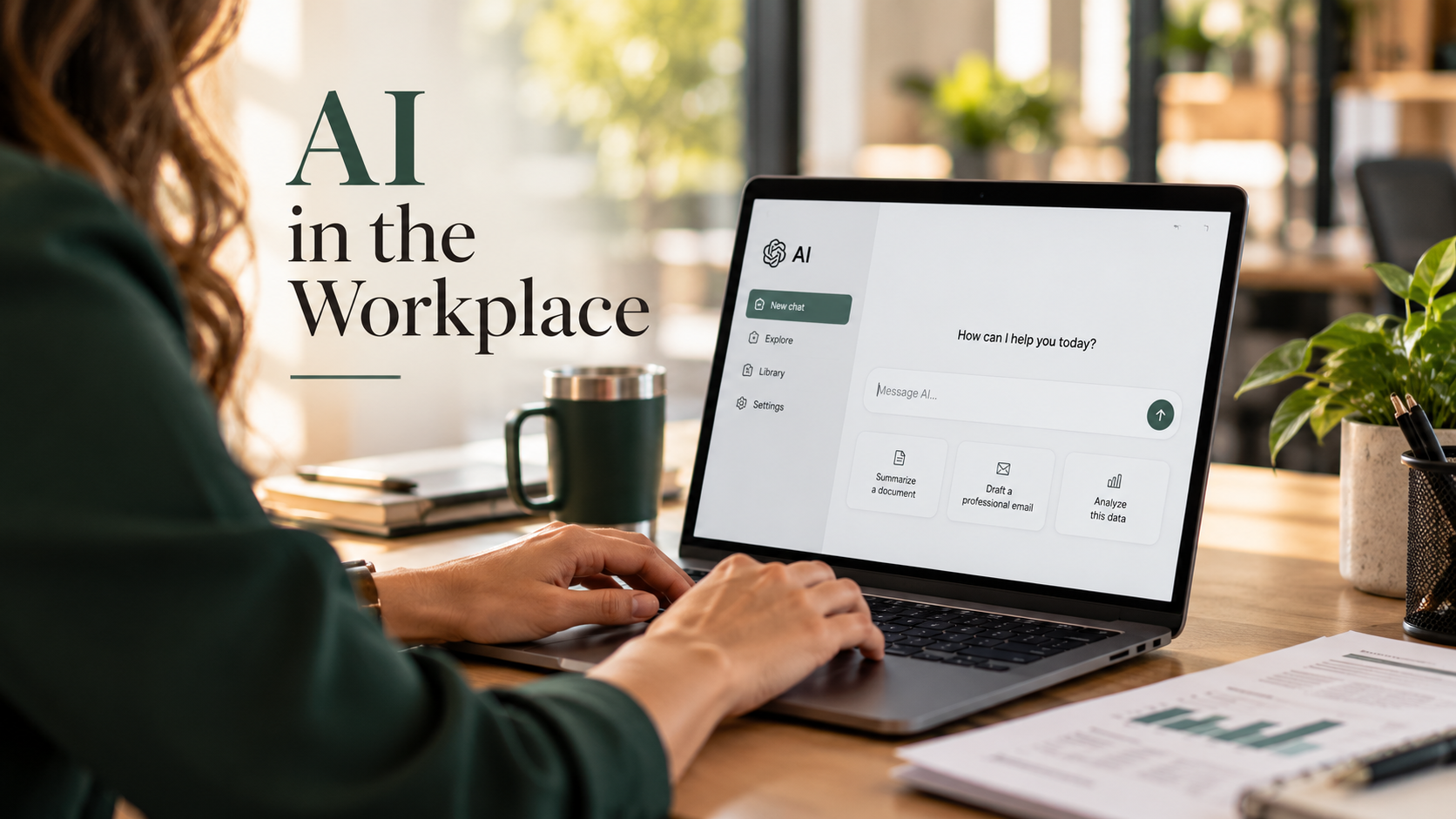
Employees are using AI tools to draft emails, summarize documents, create marketing content, analyze information, and complete tasks that once required hours of work.
For small businesses, these tools can offer meaningful advantages. They can improve productivity, support customer service, and help teams accomplish more with limited resources.
But there's an important question business owners should be asking:
Do you know how your employees are using AI—and what information they're sharing with it?
While artificial intelligence can create opportunities for growth, it can also introduce risks that aren't immediately visible.
An employee may unintentionally share confidential information. An AI-generated recommendation could contain inaccurate details. A team member might begin using an unauthorized application without understanding how company data is stored or processed.
These situations can create financial, operational, legal, and reputational exposure.
That's why responsible AI use should be part of every business's risk-management strategy.
1. Confidential Business Information Could Be Shared Without Realizing It
One of the most significant concerns surrounding workplace AI is data privacy.
Imagine an employee using an AI tool to summarize a customer contract.
To save time, they copy the entire document into the application, including customer names, financial information, pricing agreements, and other confidential details.
The employee's intention is simply to work more efficiently.
However, depending on the tool's settings, contractual terms, and data-handling practices, that information may be processed, retained, or accessed in ways the business did not anticipate.
Similar situations can arise when employees upload financial reports, customer records, employee information, proprietary business strategies, or internal communications.
The risk isn't necessarily that an AI tool will immediately expose the information. It's that the business may lose control over how sensitive data is handled.
Businesses should establish clear guidelines identifying what information employees can and cannot enter into AI applications.
Before approving a tool, leadership should understand its privacy settings, retention practices, access controls, and contractual protections.
Risk Advisor Tip: Treat confidential information entered into an AI tool with the same level of caution you would use when sharing it with an outside service provider.
2. AI-Generated Information Isn't Always Accurate
AI tools can produce polished, professional-looking responses in seconds.
Unfortunately, those responses aren't always correct.
Artificial intelligence can generate inaccurate facts, misinterpret information, provide outdated guidance, or present unsupported conclusions with confidence.
For example, imagine an employee using AI to help prepare a proposal for a client.
The tool generates information about industry regulations, project specifications, or expected costs.
Because the response appears detailed and professional, the employee includes it in the final proposal without verifying the information.
If those details are incorrect, the business could face dissatisfied customers, project delays, financial losses, or contractual disputes.
In some industries, inaccurate information may create more significant professional liability concerns.
AI can support employee productivity, but it shouldn't replace professional judgment, fact-checking, or established approval procedures.
Businesses should require appropriate human review of AI-generated information before it is used in customer communications, financial decisions, contracts, or other important business activities.
The level of review should reflect the potential consequences of an error.
3. Unauthorized AI Applications Can Create Hidden Risks
Not every AI tool used in a workplace has been approved by the business.
Employees may discover free applications, browser extensions, transcription services, or AI-powered productivity tools that promise to make their jobs easier.
They may begin using these tools without notifying management or IT personnel.
This practice is sometimes called shadow AI.
While employees may have good intentions, unauthorized applications can create security and privacy concerns.
For example, an AI meeting assistant might automatically record and summarize conversations containing sensitive customer information.
A browser extension could request broad access to emails or documents.
An unapproved AI platform might store company information outside the organization's established systems.
Without oversight, business owners may not know which applications have access to company data or how that information is being used.
To reduce these risks, businesses should establish an approval process for AI applications and maintain a list of authorized tools.
Employees should also understand why approval matters.
The objective isn't to discourage innovation. It's to ensure new technology is introduced responsibly.
4. Employees Need Clear AI-Use Policies
Many businesses already have policies covering passwords, internet access, confidential information, and company devices.
However, those policies may not specifically address artificial intelligence.
As AI becomes more common, businesses should consider developing written guidelines explaining how employees may use these tools.
An effective AI-use policy should address several important questions:
- Which AI tools are approved for business use?
- What types of information are prohibited from being uploaded?
- When must AI-generated content be reviewed by a person?
- Who is responsible for approving new AI applications?
- How should employees report suspected data exposure or inaccurate outputs?
- Are there restrictions on using AI for customer communications or important business decisions?
Policies should be practical, easy to understand, and appropriate for the company's operations.
Employee training is equally important.
A written policy provides direction, but regular communication helps employees understand how to apply it during everyday situations.
Risk Advisor Tip: Review your AI-use policies periodically as technology, business operations, and regulatory requirements evolve.
5. AI Mistakes Can Become Financial and Operational Losses
When businesses evaluate artificial intelligence, they often focus on productivity improvements and cost savings.
Those benefits are important, but leadership should also consider what could happen if an AI-related mistake causes a loss.
For example, confidential customer information could be shared improperly, resulting in investigation expenses, legal concerns, and damage to customer relationships.
An inaccurate AI-generated recommendation might lead to a costly business decision.
An unauthorized application could introduce a security vulnerability that compromises company systems.
In more serious situations, these incidents could interrupt operations, create contractual disputes, or require additional resources to resolve.
The financial consequences may extend well beyond the original mistake.
That's why AI exposure should be evaluated alongside other operational risks, including cybersecurity, professional liability, privacy, vendor management, and business continuity.
Does Your Business Insurance Address AI-Related Risks?
As businesses adopt artificial intelligence, it's important to understand how existing insurance policies may respond to incidents involving AI use.
Depending on the circumstances, relevant coverages could include cyber liability, professional liability, errors and omissions, or other business insurance policies.
However, coverage is not automatic simply because an incident involved technology.
An insurer's response depends on the cause of loss, policy wording, exclusions, limits, and other applicable conditions.
For example, a cyber policy may address certain privacy or security incidents, while professional liability coverage may be relevant to some claims arising from errors in professional services.
Other AI-related losses may fall outside the scope of existing coverage.
A comprehensive risk assessment can help identify how employees are using AI, what exposures those activities create, and whether current insurance protection aligns with the business's operations.
The goal is to understand the risks before an incident reveals a potential coverage gap.
Five Questions Every Business Owner Should Ask About AI
If your employees are already using artificial intelligence, now is a good time to evaluate how those tools fit into your business.
Start with these five questions:
1. Do we know which AI tools our employees are using?
Identify both approved and unapproved applications.
2. Are employees sharing confidential information with AI platforms?
Review how customer data, financial records, employee information, and proprietary materials are handled.
3. Do we verify AI-generated information before using it?
Establish appropriate review procedures for important business decisions and customer-facing content.
4. Do we have a written AI-use policy?
Make sure employees understand acceptable use, prohibited activities, and reporting procedures.
5. Have we evaluated our insurance exposure?
Consider whether AI use creates new privacy, cybersecurity, professional liability, or operational risks.
These questions can help business owners identify vulnerabilities while still benefiting from the efficiencies artificial intelligence can provide.
Innovation Shouldn't Come at the Expense of Protection
Artificial intelligence is changing how businesses operate, and its role in the workplace will likely continue to expand.
For many organizations, avoiding AI entirely isn't practical or necessary.
Instead, the focus should be on responsible adoption.
Businesses can take advantage of new technology while establishing appropriate safeguards for confidential information, employee access, content accuracy, and operational decision-making.
Clear policies, employee education, approved applications, and consistent oversight can help reduce unnecessary exposure.
And just as importantly, businesses should regularly evaluate whether their insurance and risk-management strategies are keeping pace with the technologies they use.
Because adopting new tools shouldn't mean overlooking new risks.
Is Your Business Prepared for the Risks of AI?
Your employees may already be using artificial intelligence to complete everyday tasks.
But have you considered how those activities could affect your business's finances, operations, customer information, and insurance protection?
At Fortis Risk Group, we believe proactive risk management begins with understanding how your business operates today—and anticipating how those operations may change tomorrow.
Contact a Fortis Risk Advisor for a comprehensive policy and risk review.
Our team can help you evaluate emerging technology exposures, review your existing insurance protection, and identify potential gaps as your business adopts new tools and processes.
Because protecting your business means staying ahead of the risks that come with progress.
Listen. Lead. Protect.
Latest insights and trends





Let’s Build Your Protection Strategy