
Commercial Fleet Safety Tips for the Holiday Season
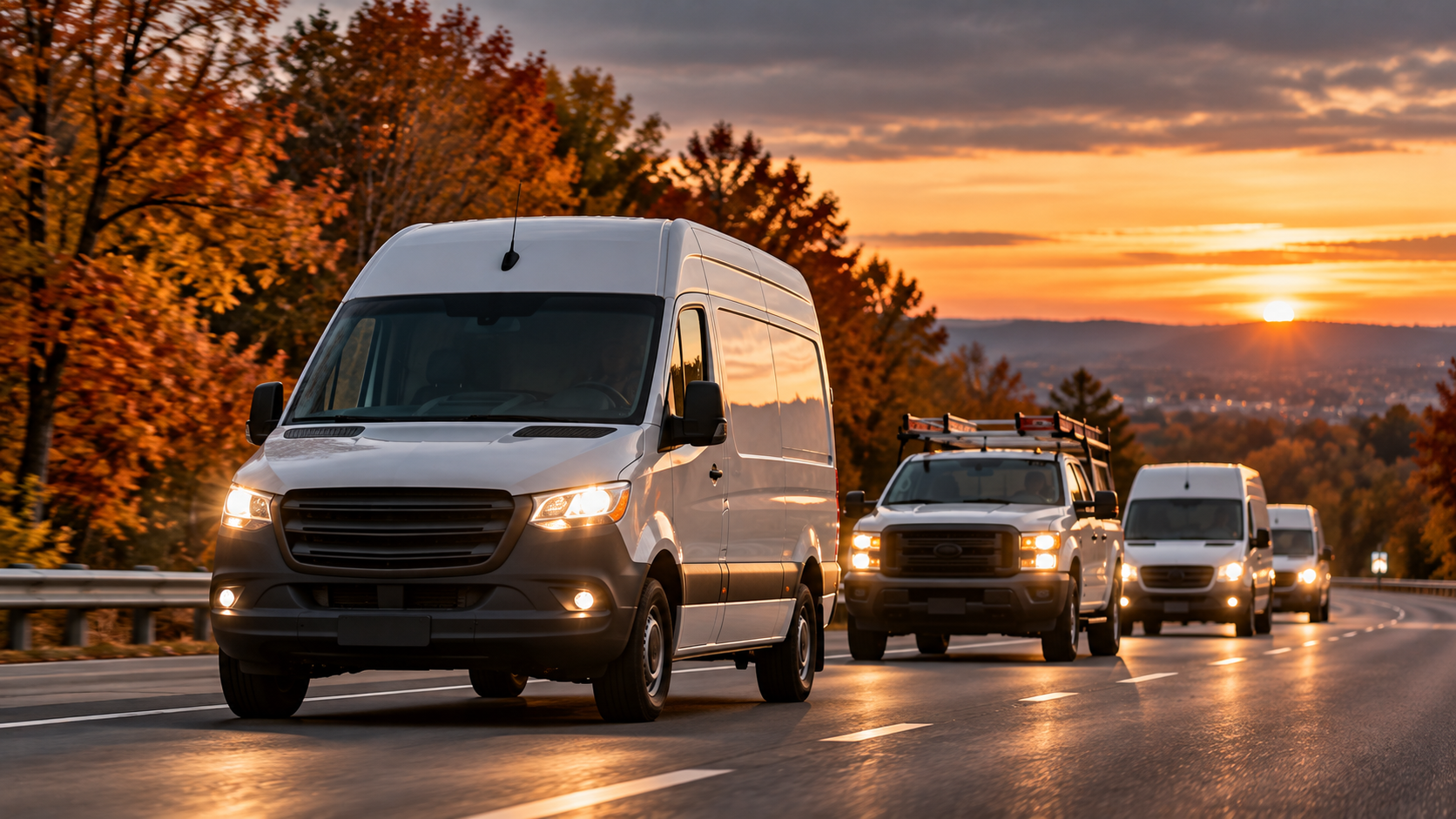
Are Your Company Vehicles Ready for Shorter Days and Holiday Traffic?
As the year moves into its final months, many businesses begin preparing for increased customer demand, tighter schedules, and the busy holiday season. But while business owners are focused on inventory, staffing, and year-end operations, there's another important area that deserves attention: company vehicles.
Shorter daylight hours, heavier traffic, changing weather conditions, and increased delivery demands can create additional risks for employees who drive as part of their jobs.
Whether your business operates a fleet of delivery trucks, service vans, contractor vehicles, or just a few company cars, seasonal driving conditions can affect employee safety, operational efficiency, and financial exposure.
The question isn't simply whether your vehicles are ready for the road. It's whether your business is prepared for the risks that come with putting them there.
Shorter Days Mean More Time Driving in the Dark
As daylight hours decrease during the fall and winter, employees who previously completed their routes in daylight may find themselves driving before sunrise or after sunset.
Reduced visibility can make it more difficult to identify pedestrians, cyclists, road hazards, and other vehicles. Glare from headlights, wet pavement, and poorly illuminated roads can create additional challenges.
For businesses that rely on drivers to complete service calls, deliveries, or customer visits, these conditions can increase the importance of safe driving practices.
Employers should encourage drivers to reduce speed when visibility is limited, maintain appropriate following distances, and allow additional time for travel.
Vehicle lighting also deserves attention. Headlights, brake lights, turn signals, and reflective markings should be inspected regularly to ensure they are functioning properly.
Even something as simple as cleaning headlights and windshields can improve visibility.
Risk Advisor Tip: Review employee driving schedules as daylight hours change. Routes that were manageable during the summer may require additional planning during the fall and winter.
Driver Fatigue Can Become a Hidden Business Risk
The holiday season often brings increased workloads and longer operating hours.
Delivery drivers may be asked to complete additional routes. Service technicians may work extended shifts to meet customer demand. Employees may travel between job sites while balancing tight deadlines.
While these changes can help businesses manage seasonal demand, they may also increase the risk of driver fatigue.
Fatigue can affect reaction time, concentration, decision-making, and a driver's ability to recognize hazards.
An employee who is physically exhausted or mentally distracted may be less prepared to respond to sudden traffic changes or unexpected road conditions.
Businesses should evaluate whether driving schedules allow employees adequate rest and realistic travel time.
Encourage employees to report fatigue and establish procedures for adjusting assignments when necessary.
For operations subject to federal or state hours-of-service requirements, employers should also ensure that schedules and procedures comply with applicable regulations.
A delivery completed on time should never come at the expense of employee or public safety.
Vehicle Maintenance Is More Important Than Ever
Seasonal changes provide a natural opportunity to review vehicle maintenance procedures.
Company vehicles often accumulate significant mileage throughout the year, particularly when employees travel between job sites or complete frequent deliveries.
Before entering the holiday season, businesses should inspect critical vehicle components, including tires, brakes, lights, windshield wipers, batteries, and fluid levels.
Tire condition deserves particular attention. Worn tires can reduce traction, especially on wet roads.
Drivers should also check tire pressure regularly, as temperature changes can affect inflation.
For businesses operating trucks, trailers, or vehicles carrying equipment, inspections should include cargo restraints, trailer connections, and other components necessary for safe operation.
Maintaining accurate service records can help businesses track repairs, identify recurring issues, and demonstrate a consistent approach to vehicle safety.
A proactive maintenance program may also reduce unexpected breakdowns that interrupt customer service or delay important deliveries.
Seasonal Deliveries Can Change Your Business's Exposure
For many businesses, the final quarter brings a noticeable increase in deliveries and transportation activity.
Retailers may expand local delivery services. Contractors may transport additional materials between job sites. Distributors may increase the frequency of shipments, and service businesses may extend operating hours to meet customer needs.
These operational changes can introduce risks that weren't present during slower periods.
More time on the road means greater exposure to traffic conditions and potential accidents.
Additional drivers may be needed to manage increased demand, while unfamiliar routes and tighter delivery schedules can create distractions.
Businesses should review their driver qualification procedures, vehicle assignments, and delivery expectations before expanding operations.
If seasonal employees will be operating company vehicles, confirm that they meet applicable licensing requirements and your insurer's driver eligibility guidelines.
It's also important to consider whether employees are using personal vehicles for business purposes.
A personal auto insurance policy may not adequately address certain business-related driving exposures.
Depending on the circumstances, hired and non-owned auto liability coverage may be an important consideration.
A comprehensive commercial auto insurance review can help determine whether your coverage reflects how vehicles are actually being used.
Distracted Driving Can Have Serious Consequences
Busy driving schedules can create pressure to multitask.
Employees may receive calls from customers, messages from supervisors, or updates to delivery instructions while traveling.
However, even brief distractions can significantly reduce a driver's ability to respond to changing road conditions.
Businesses should establish clear expectations regarding mobile device use and other distractions.
Employees should never feel that responding immediately to a message is more important than operating a vehicle safely.
Consider implementing procedures that allow drivers to pull over safely before reviewing instructions or returning calls.
Supervisors should also avoid creating unrealistic expectations that encourage employees to use devices while driving.
Fleet safety begins with consistent policies, but those policies must be reinforced by everyday management decisions.
Could a Vehicle Accident Interrupt Your Business?
When business owners think about commercial auto insurance, they often focus on repairing damaged vehicles.
But a serious accident can create consequences that extend well beyond the cost of repairs.
An accident involving a company vehicle could result in injuries, property damage, liability claims, lost productivity, and interruptions to customer service.
If a critical service truck is unavailable, employees may be unable to complete scheduled work.
A delivery vehicle accident could delay customer orders or disrupt business relationships.
In more serious situations, liability claims may create substantial financial exposure.
Commercial auto insurance may provide coverage for certain liability claims and physical damage losses, depending on the policy and selected coverages.
However, not every financial consequence of a vehicle accident is automatically covered.
Businesses should understand their liability limits, deductibles, vehicle schedules, and any applicable exclusions.
For companies with significant vehicle exposure, commercial umbrella or excess liability insurance may also be worth discussing with a Risk Advisor.
Five Questions to Ask About Your Fleet Before the Holiday Season
Before seasonal driving demands increase, take time to evaluate your company's transportation risks.
1. Are our vehicles properly maintained?
Review inspection schedules, service records, tire conditions, and essential safety equipment.
2. Have our driving schedules changed?
Consider how shorter days, longer routes, and increased workloads may affect employee fatigue and visibility.
3. Are seasonal or temporary drivers properly qualified?
Confirm licensing, training, driving records, and applicable insurance requirements.
4. Are employees using personal vehicles for business purposes?
Determine whether your business has appropriate protection for hired and non-owned auto exposures.
5. Do our commercial auto limits reflect our current operations?
Evaluate vehicle usage, liability exposure, fleet changes, and potential coverage gaps.
These questions can help identify areas where additional safety measures or insurance adjustments may be appropriate.
Fleet Safety Is Part of a Stronger Risk-Management Strategy
Company vehicles play an important role in keeping businesses moving.
They transport employees, deliver products, support customer service, and help businesses fulfill their commitments.
But every vehicle on the road also represents potential exposure.
As the holiday season approaches, business owners should consider how seasonal changes affect their drivers, vehicles, schedules, and insurance needs.
Routine maintenance, realistic driving expectations, employee training, and clear safety procedures can help reduce the likelihood of accidents.
Just as importantly, reviewing commercial auto insurance can help businesses understand whether their protection aligns with their current operations.
Protecting your fleet isn't just about protecting vehicles. It's about protecting your employees, customers, financial stability, and ability to keep doing business.
Is Your Commercial Auto Coverage Keeping Pace With Your Business?
Your company may be driving more miles, making more deliveries, or operating additional vehicles than it did when your insurance policy was last reviewed.
Those changes can affect your risk exposure.
At Fortis Risk Group, we believe proactive protection begins with understanding how your business operates and anticipating the challenges ahead.
Contact a Fortis Risk Advisor for a comprehensive policy and risk review.
Our team can help you evaluate your commercial auto coverage, vehicle liability limits, driver exposures, and potential insurance gaps before an unexpected accident disrupts your operations.
Because protecting your business means making sure you're prepared for the road ahead.
Listen. Lead. Protect.
Latest insights and trends

Professional Liability vs. General Liability: What's the Difference

Fall Storm Preparedness for Small Businesses
Are Your Employees Using AI Safely? Business Risks


Let’s Build Your Protection Strategy