What Goes Into a Business Insurance Quote?
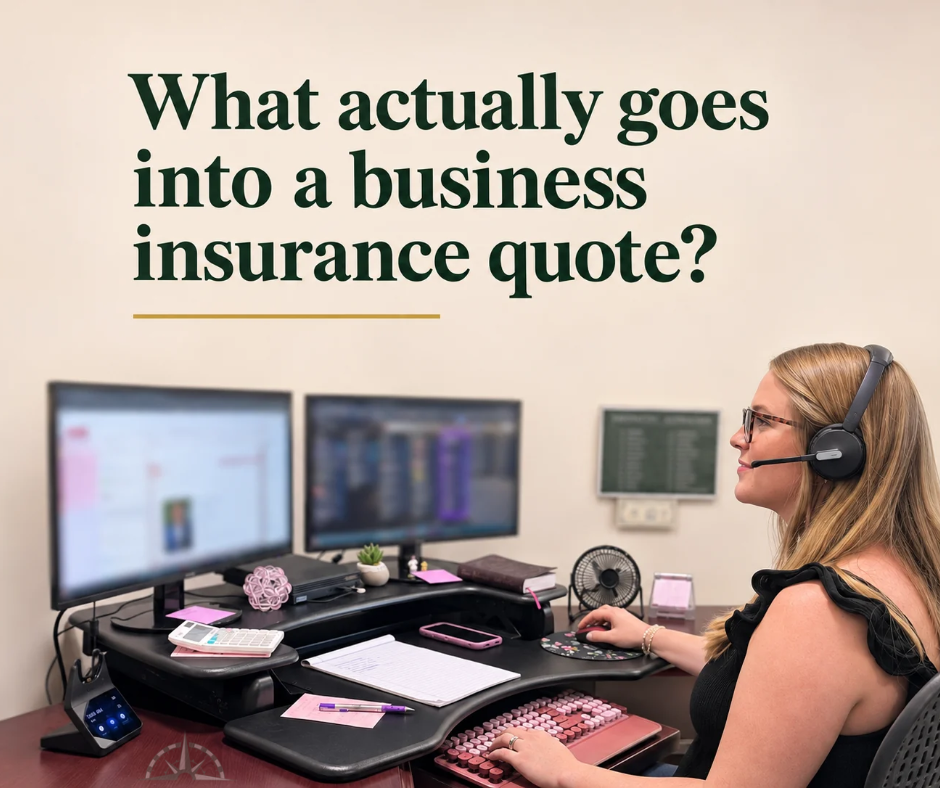
What Actually Goes Into a Business Insurance Quote?
Two businesses operate in the same industry. They provide similar services, serve customers in the same general area, and may even compete for the same projects.
Yet when they request commercial insurance quotes, their premiums can be significantly different.
One business owner might receive a quote for several thousand dollars less than another, leaving them wondering whether they're paying too much or missing out on a better deal.
It's a reasonable question, and one that deserves more than a simple explanation about insurance rates.
The truth is that insurance companies don't evaluate businesses based on industry alone. They evaluate the risks associated with how each individual business operates.
From the services you provide and the employees you hire to the vehicles you use and the coverage limits you select, numerous factors can influence the cost of commercial insurance.
Understanding those factors can help you make more informed decisions about protecting your business.
Two Contractors, Same Industry, Different Risks
Consider two hypothetical landscaping contractors operating in the same community.
The first company focuses primarily on routine residential lawn maintenance. It has four employees, operates two pickup trucks, and performs mowing, trimming, and basic landscape maintenance.
The second company also identifies as a landscaping contractor, but its operations are considerably different.
It has twelve employees, operates multiple commercial trucks and trailers, performs tree removal and grading work, and regularly takes on larger commercial projects.
Both businesses may describe themselves as landscaping companies.
However, their day-to-day activities create very different exposures.
The second contractor may operate heavier equipment, perform work with greater potential for property damage or injury, have more employees exposed to workplace hazards, and drive more vehicles on public roads.
Those differences can influence how an insurance company evaluates each business.
Your industry classification is only the starting point. What your business actually does matters just as much.
1. The Type of Work Your Business Performs
One of the first things an insurance company considers is the nature of your operations.
Even businesses within the same industry may perform services with different levels of risk.
For example, an electrical contractor who primarily handles residential service calls may have a different risk profile from one working on large commercial construction projects.
Similarly, a contractor performing routine landscape maintenance may face different exposures than one operating heavy machinery, excavating land, or removing large trees.
Insurance companies consider the potential frequency and severity of losses associated with those activities.
The more accurately your operations are described, the better an insurer can evaluate your exposure and determine appropriate coverage options.
This is why providing detailed information about your services is essential when requesting a quote.
2. Payroll and the Number of Employees
Payroll is another important factor in commercial insurance pricing, particularly for workers' compensation.
Workers' compensation premiums are commonly influenced by employee classifications, estimated payroll, applicable rates, and other rating factors.
A business with fifteen employees may have a different exposure than a similar company with three employees, especially when workers perform physically demanding tasks.
But the number of employees isn't the only consideration.
The type of work they perform matters, too.
An office administrator and a roofing technician generally have different workplace injury exposures.
As businesses hire additional employees, expand payroll, or change job responsibilities, their workers' compensation insurance needs may also change.
Accurate payroll estimates and employee classifications can help reduce surprises during the policy audit process.
3. Annual Revenue and Business Size
Revenue can influence commercial insurance pricing because it may serve as a measure of business activity or exposure for certain types of coverage.
A company generating $250,000 annually may operate on a very different scale from one generating $3 million.
Higher revenue doesn't automatically mean a business is less safe or more likely to experience a claim.
However, depending on the coverage and rating method, greater business activity may mean more customers, larger projects, additional transactions, or increased exposure to potential liability.
Insurers may use gross sales, receipts, payroll, or other measures when evaluating certain policies.
That's why accurate financial information is important when obtaining a commercial insurance quote.
4. Company Vehicles and Driving Exposure
If your business uses vehicles, commercial auto insurance can represent a significant portion of your overall insurance costs.
Insurers may evaluate the number and type of vehicles, how they are used, where they operate, and the drivers assigned to them.
Consider our two landscaping contractors again.
The smaller company uses two pickup trucks for local residential service calls.
The larger company operates several trucks, trailers, and vehicles used to transport equipment to commercial job sites across a wider geographic area.
Those operations create different driving exposures.
Vehicle values, driving records, mileage, radius of operation, and claims history may all influence pricing.
Businesses should also disclose when employees use personal vehicles for work-related activities, since those situations may create additional liability considerations.
5. Claims History and Loss Experience
Insurance companies often review a business's prior claims when evaluating its risk profile.
A company with repeated vehicle accidents, workplace injuries, or property losses may be evaluated differently from a similar business with fewer claims.
However, claims history isn't simply about counting incidents.
Insurers may also consider the types of claims, their severity, how recently they occurred, and whether the business has implemented measures to reduce future losses.
For example, a contractor who experienced several preventable vehicle accidents may benefit from implementing a driver safety program and reviewing vehicle-use procedures.
Although preventive improvements don't guarantee lower premiums, they can demonstrate a proactive approach to risk management.
Your claims history tells part of your business's story. Your current safety practices help explain how you're managing risk moving forward.
6. Business Location and Property Exposure
Where your business operates can also influence insurance pricing.
Insurers may consider factors such as local weather exposure, building construction, property values, fire protection, crime-related risks, and proximity to certain hazards.
A business operating from a newer commercial building may have different property exposures than one occupying an older structure with aging electrical or roofing systems.
Similarly, a company storing valuable equipment outdoors may face different risks from one keeping those assets inside a secured facility.
For businesses operating in multiple locations, each property may introduce its own considerations.
A comprehensive risk assessment should evaluate the physical characteristics of your business locations and the property you need to protect.
7. Coverage Limits, Deductibles, and Policy Terms
Two insurance quotes can appear similar while providing very different levels of protection.
One policy may include higher liability limits, broader coverage provisions, or additional endorsements.
Another may have lower limits, higher deductibles, or exclusions that significantly affect how a future claim is handled.
For example, a contractor comparing two general liability quotes should look beyond the annual premium.
The policies may differ in coverage limits, exclusions, endorsements, or how certain operations are treated.
A lower premium may reflect a difference in coverage rather than a better price for equivalent protection.
Deductibles also affect how much a business may be responsible for paying following a covered loss.
The most useful insurance comparison isn't simply which policy costs less. It's which policy provides appropriate protection for the risks your business actually faces.
Why Accurate Information Matters When Requesting a Quote
A commercial insurance quote is only as useful as the information provided during the application process.
If your business operations are described inaccurately, payroll is underestimated, vehicles are omitted, or important activities aren't disclosed, the quote may not reflect your actual exposure.
Those discrepancies can create complications during underwriting, policy audits, renewals, or claims.
Business owners should be prepared to discuss their services, staffing, revenue, equipment, vehicles, locations, contracts, and prior losses.
It's also important to communicate anticipated changes.
If you're preparing to hire additional employees, expand into a new service area, or purchase expensive equipment, those plans may affect your insurance needs.
Providing complete information helps your Risk Advisor evaluate coverage options more effectively.
Why Working With a Risk Advisor Makes a Difference
Requesting an insurance quote shouldn't be limited to filling out a form and receiving a number.
A comprehensive risk assessment looks at how your business operates and identifies potential exposures that may not be obvious during a basic application process.
At Fortis Risk Group, our approach begins with understanding your business.
That means asking questions about the work you perform, the employees you rely on, the property you own, the vehicles you operate, and the responsibilities you've accepted through contracts.
From there, a Risk Advisor can help evaluate coverage options, compare policy terms, and identify potential gaps.
The objective isn't simply to find a lower premium.
It's to help you make informed decisions about protecting the business you've worked hard to build.
The Right Insurance Quote Starts With the Right Questions
Two businesses in the same industry can receive different insurance quotes because no two businesses operate exactly alike.
Payroll, revenue, services, vehicles, location, claims history, and coverage choices all contribute to the way insurers evaluate risk.
Understanding these factors can help explain why premiums differ and why comparing insurance policies requires more than looking at price.
As your business grows and changes, your insurance needs may change with it.
That's why proactive risk reviews are so important.
The question shouldn't only be, “How much does business insurance cost?” It should also be, “What risks am I paying to protect against?”
Is Your Business Insurance Quote Telling the Whole Story?
If you're comparing commercial insurance quotes or preparing for an upcoming renewal, make sure you're evaluating more than the premium.
Contact a Fortis Risk Advisor for a comprehensive policy and risk review.
Our team can help you assess your operations, understand the factors influencing your insurance costs, compare coverage options, and identify potential gaps in protection.
Because the right insurance strategy starts with understanding your business—not simply finding the lowest price.
Listen. Lead. Protect.
Latest insights and trends
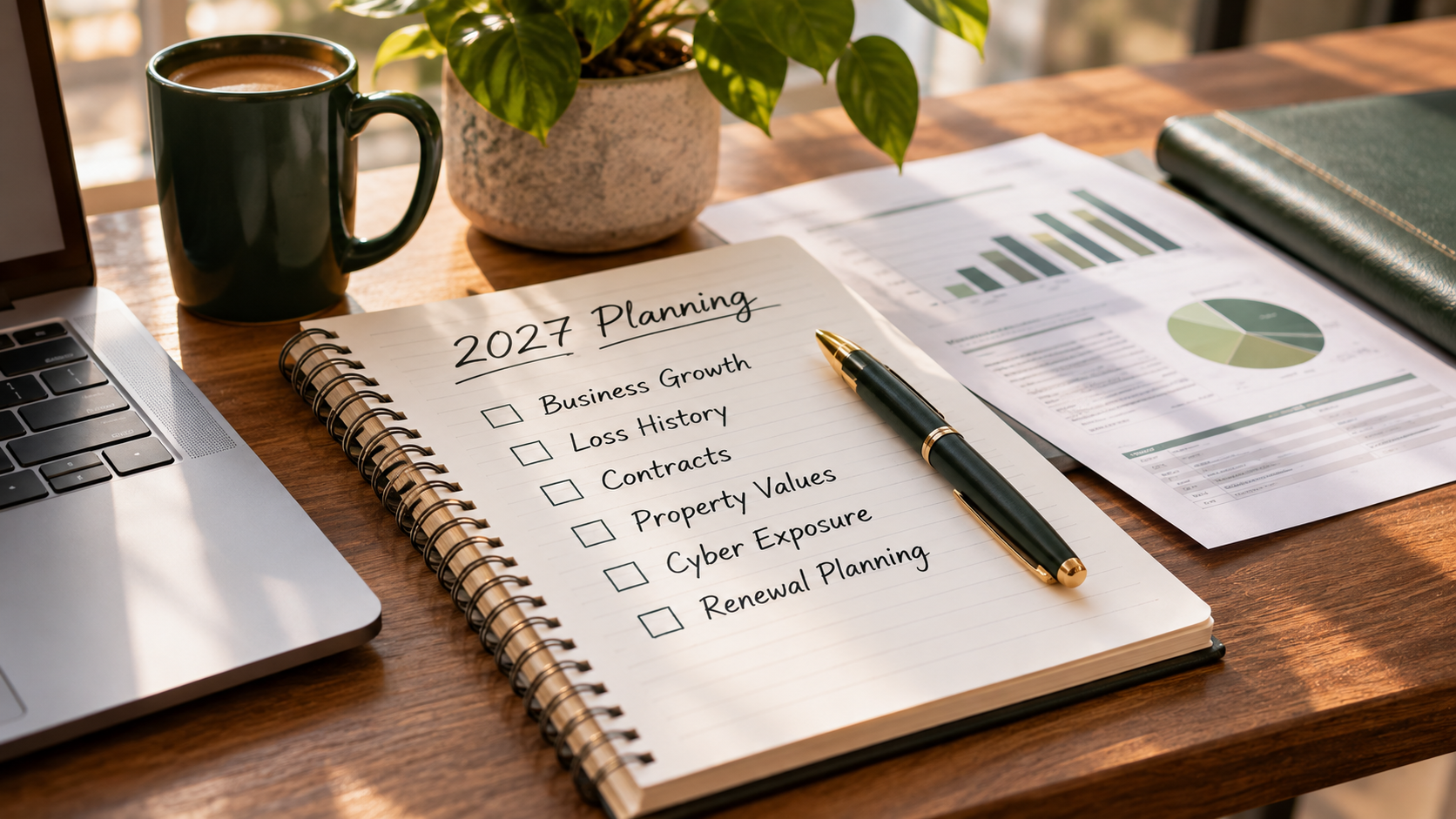
2027 Business Budget Planning: Review Your Risks
Commercial Fleet Safety Tips for the Holiday Season

Professional Liability vs. General Liability: What's the Difference

Fall Storm Preparedness for Small Businesses
Are Your Employees Using AI Safely? Business Risks
Let’s Build Your Protection Strategy