Why Did My Workers' Comp Audit Result in a Bill?
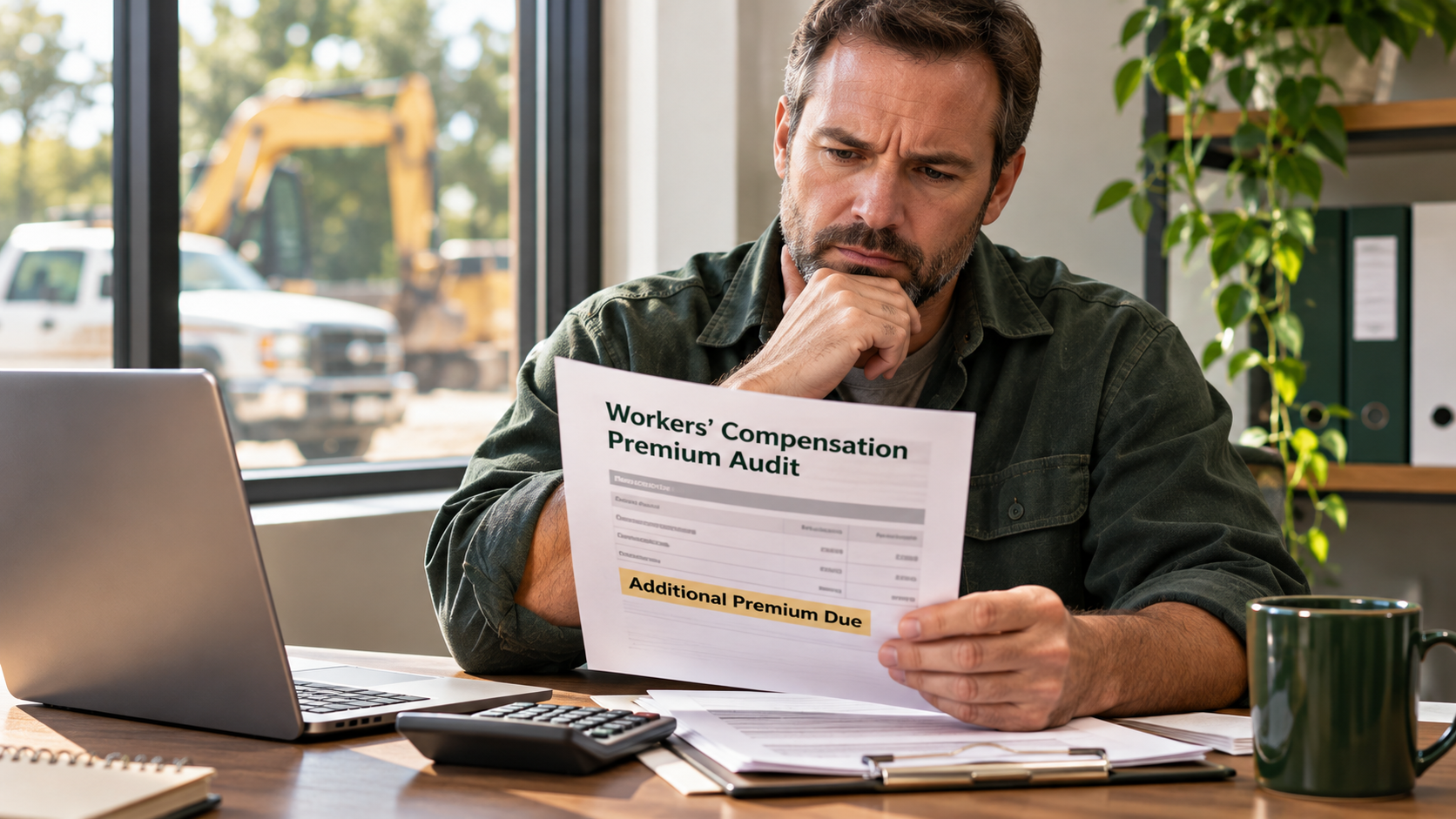
Why Did My Workers' Compensation Audit Result in an Additional Bill?
Imagine opening your mail and finding a bill from your workers' compensation insurance company for a policy that expired several weeks ago.
You've already paid your premiums. The policy period is over. You may have even renewed your coverage with the same company or switched to another insurer.
So why are you being asked to pay more?
For many business owners, an unexpected workers' compensation audit bill can be frustrating and confusing. It may feel like an additional charge for coverage you've already purchased.
However, workers' compensation premiums are often based on estimated payroll at the beginning of the policy period and adjusted after the policy ends to reflect actual exposure.
That adjustment is one of the primary purposes of a workers' compensation premium audit.
Understanding how the process works can help you avoid surprises, maintain more accurate records, and better prepare your business for future renewals.
Why Workers' Compensation Policies Are Audited
When you purchase a workers' compensation policy, your insurance company typically calculates the initial premium using information about your business, including estimated annual payroll, employee job classifications, and applicable insurance rates.
The challenge is that these numbers are estimates.
Your business may hire additional employees, experience higher-than-expected sales, increase wages, or take on new projects throughout the year.
You may also reduce staff, change operations, or experience lower payroll than originally projected.
Because your actual payroll and operations may differ from your initial estimates, insurance companies commonly conduct a premium audit after the policy period ends.
The audit compares the information used to calculate your original premium with what actually occurred during the coverage period.
If your actual exposure was higher than estimated, you may owe additional premium.
If it was lower, you may be eligible for a premium refund or credit, depending on the policy terms and applicable rules.
An audit isn't necessarily a sign that something went wrong. It's a process used to reconcile estimated insurance costs with actual business activity.
Estimated Payroll vs. Actual Payroll: Where Additional Bills Begin
One of the most common reasons for an additional workers' compensation bill is a difference between estimated and actual payroll.
Let's look at a hypothetical example.
A small contracting company purchases a workers' compensation policy based on an estimated annual payroll of $300,000.
During the year, the company experiences unexpected growth. It hires additional employees, increases wages, and completes several larger projects.
By the end of the policy period, its actual auditable payroll has increased to $425,000.
The original premium was based on $300,000 in payroll, but the company had a greater payroll exposure during the year.
When the insurance company completes its audit, it may calculate additional premium based on the difference, subject to applicable classifications, rates, adjustments, and policy terms.
The business owner may then receive an additional bill even though the policy has expired.
This is why monitoring payroll throughout the year is important.
If your business is growing faster than expected, communicating those changes to your Risk Advisor can help you anticipate potential premium adjustments.
Employee Classifications Can Make a Significant Difference
Workers' compensation insurance pricing isn't based on payroll alone.
The type of work employees perform is also important.
Insurance companies use classification codes to categorize different business operations and job duties. These classifications help reflect the level of occupational risk associated with particular activities.
For example, an employee performing administrative office duties may have a different classification than someone operating heavy equipment or working on a construction site.
Each classification may carry a different insurance rate.
During an audit, the insurer may review payroll records and employee job responsibilities to determine whether the classifications used at the beginning of the policy accurately reflected the work performed.
If employees were classified incorrectly or their duties changed during the policy period, the audit may result in a premium adjustment.
Consider a contractor who initially reported employees performing basic landscape maintenance but later expanded into grading or tree removal services.
Those activities may involve different workers' compensation classifications and rates.
Accurately describing your employees' responsibilities is just as important as accurately reporting their payroll.
Businesses should review employee classifications when job duties change and maintain documentation that supports how payroll is allocated.
Classification rules vary by state and rating system, so employers should work with their insurance professionals to confirm how those rules apply.
Why Subcontractor Payments May Appear on Your Audit
For contractors and other businesses that regularly hire subcontractors, subcontractor payments can be one of the biggest sources of unexpected audit adjustments.
Many business owners assume that because a subcontractor isn't a traditional employee, payments to that individual or company won't affect workers' compensation premiums.
That isn't always the case.
Depending on applicable state laws, workers' compensation rating rules, and the circumstances of the working relationship, certain subcontractor costs may be included in the premium calculation.
For example, a general contractor may hire several subcontractors to complete specialized work during the year.
If the contractor cannot provide acceptable documentation showing that those subcontractors maintained appropriate workers' compensation coverage, the insurer may include some or all of the relevant subcontractor payments when calculating auditable exposure.
This can create a substantial difference between the estimated and final premium.
A certificate of insurance is an important starting point, but businesses should also verify that the documentation is appropriate, covers the relevant work period, and satisfies applicable requirements.
Simply having a general liability certificate doesn't necessarily establish that a subcontractor carries workers' compensation insurance.
Businesses should maintain organized subcontractor records, including certificates of insurance, contracts, payment information, and other required documentation.
Don't wait until the audit to discover that you're missing insurance records for subcontractors you've already paid.
What Records Will You Need for a Workers' Compensation Audit?
Preparing for a premium audit becomes much easier when your records are organized throughout the year.
Insurance companies may request payroll reports, quarterly tax filings, employee job descriptions, subcontractor payment records, and certificates of insurance.
They may also request information about owners or officers, overtime, bonuses, and other forms of compensation.
The exact records required depend on the insurer, policy, and applicable rating rules.
Accurate payroll records are especially important because not every type of compensation is necessarily treated the same way for premium calculations.
For example, certain overtime premium amounts may receive different treatment under applicable rules when properly documented.
Businesses should avoid making assumptions about which payments are included or excluded.
Instead, maintain detailed records and ask questions when reporting requirements are unclear.
Using consistent bookkeeping procedures and keeping employee responsibilities documented can make the audit process more efficient.
Can You Dispute a Workers' Compensation Audit Bill?
Receiving an additional premium bill doesn't automatically mean the amount is incorrect.
However, business owners should understand how the adjustment was calculated.
If the final premium is significantly higher than expected, request a copy of the audit results and review the information carefully.
Check whether the payroll figures are accurate, employee classifications reflect actual job duties, and subcontractor payments were handled appropriately.
You should also verify that the audit applies to the correct policy period and that any relevant documentation was considered.
If you identify a potential error, contact your insurance company or Risk Advisor promptly to discuss the audit dispute or correction process.
Insurers may have specific procedures and deadlines for requesting a review.
It's important not to ignore the bill while investigating a potential discrepancy. Ask about payment requirements, deadlines, and available options.
A Risk Advisor can help you understand the audit findings and communicate with the insurer when clarification is needed.
Five Ways to Prepare for Your Next Workers' Compensation Audit
The best time to prepare for a workers' compensation audit is long before the policy expires.
1. Review your payroll estimates regularly.
Compare your actual payroll with the estimates used when your policy began. If your business experiences significant growth or staffing changes, discuss those changes with your Risk Advisor.
2. Keep employee classifications current.
Document employee responsibilities and communicate changes in job duties or business operations that may affect workers' compensation classifications.
3. Collect subcontractor insurance documentation before work begins.
Establish procedures for obtaining and reviewing certificates of insurance and other required records. Monitor expiration dates and retain documentation for the appropriate periods.
4. Maintain organized financial records.
Keep payroll reports, tax filings, subcontractor payments, and supporting documentation accessible throughout the policy period.
5. Review audit results before filing them away.
Compare the final audit with your records and ask questions about unexpected adjustments.
These steps can help reduce administrative complications and make it easier to anticipate potential premium changes.
How to Avoid Unexpected Workers' Compensation Expenses
While an audit may still result in an additional premium, businesses can take steps to reduce the likelihood of being caught off guard.
Start by providing realistic payroll estimates when purchasing or renewing coverage.
If your business expects to expand, hire additional employees, or accept larger contracts, discuss those plans with your Risk Advisor.
Throughout the year, monitor payroll changes and maintain accurate records of employee duties and subcontractor relationships.
If your actual payroll is substantially higher than projected, ask whether your premium estimates or payment arrangements should be updated.
Some insurers may offer options for adjusting estimated premiums during the policy period, depending on their procedures and policy terms.
The goal isn't to eliminate the audit. It's to make the final adjustment more predictable.
A little planning throughout the year can help prevent an unexpected insurance bill from disrupting your business's cash flow.
Your Workers' Compensation Audit Is an Opportunity to Review Your Risk
A workers' compensation audit may feel like a routine administrative requirement, but it can also reveal important information about how your business has changed.
Higher payroll may reflect growth. New employee classifications may indicate expanded operations. Increased subcontractor costs may show that your company is taking on larger projects.
Each of these changes can affect your overall insurance and risk-management needs.
Rather than viewing the audit as an isolated event, use it as an opportunity to review your business's current exposures.
Are your employees classified correctly? Have your operations expanded? Are your subcontractor documentation procedures adequate? Does your current insurance program still reflect the work your company performs?
These are valuable questions to consider before your next renewal.
Have Questions About Your Workers' Compensation Audit?
If you've received an unexpected workers' compensation audit bill, don't assume you have to navigate the process alone.
At Fortis Risk Group, we believe business owners should understand how their insurance works and what factors influence their costs.
Our team can help you review your workers' compensation coverage, discuss payroll and classification changes, understand audit adjustments, and identify opportunities to improve your risk-management procedures.
Contact a Fortis Risk Advisor for a comprehensive policy and risk review.
Whether you're preparing for an upcoming audit, reviewing an unexpected premium adjustment, or planning for your next renewal, we're here to help you make informed decisions about protecting your business.
Because understanding your risks today can help you avoid costly surprises tomorrow.
Listen. Lead. Protect.
Latest insights and trends

Business Insurance Rates: Should You Shop Before Renewal?
What Goes Into a Business Insurance Quote?

2027 Business Budget Planning: Review Your Risks

Commercial Fleet Safety Tips for the Holiday Season

Professional Liability vs. General Liability: What's the Difference
Let’s Build Your Protection Strategy