Does My Business Need Insurance for Independent Contractors?

Does My Business Need Insurance for Independent Contractors?
Hiring independent contractors is a common way for businesses to manage workloads, expand services, and complete projects without adding permanent employees.
A general contractor may hire electricians, plumbers, or roofing specialists. A landscaping company might bring in a tree removal crew for a large project. A property management company may rely on independent maintenance professionals to handle repairs.
These arrangements can offer flexibility and valuable expertise.
But they also raise an important question:
If the independent contractor already carries insurance, is your business protected if something goes wrong?
Not necessarily.
While a subcontractor's insurance can be an important part of managing risk, it doesn't automatically eliminate your business's potential liability.
Understanding how insurance coverage, contracts, and subcontractor relationships work together can help protect your company from unexpected financial exposure.
Why Hiring an Independent Contractor Doesn't Automatically Eliminate Liability
One of the most common assumptions business owners make is that hiring an independent contractor transfers all responsibility for the work to that individual or company.
However, liability isn't always that simple.
Imagine a general contractor hires a subcontractor to complete electrical work on a commercial renovation.
Several weeks later, a fire occurs, and an investigation suggests that improperly installed wiring may have contributed to the damage.
The property owner may pursue a claim against the electrical subcontractor, but the general contractor could also become involved because of its responsibilities under the construction agreement, its own conduct, or applicable law.
Even when the subcontractor performed the work, the general contractor may still face legal expenses or potential liability.
Whether a business is ultimately responsible depends on the circumstances, contractual obligations, and applicable laws.
Hiring someone else to perform the work doesn't necessarily remove your business from the risk.
This is why subcontractor risk management should begin before work starts.
What Insurance Should Independent Contractors Carry?
The insurance requirements for independent contractors depend on the type of work being performed and the risks involved.
For many businesses, commercial general liability insurance is an important starting point.
General liability insurance may provide protection for certain third-party bodily injury and property damage claims arising from covered business operations, subject to policy terms and exclusions.
For example, if a subcontractor accidentally damages a customer's property while performing covered work, its general liability policy may respond, depending on the circumstances.
However, general liability insurance doesn't cover every potential loss.
A subcontractor providing professional advice, design services, or specialized consulting may also need professional liability insurance.
Contractors who operate vehicles for business purposes may need commercial auto insurance.
Businesses with employees may be required to carry workers' compensation insurance, depending on state law and other applicable requirements.
Some projects may also require specialized coverage for equipment, pollution exposures, or other industry-specific risks.
The appropriate insurance requirements should reflect the actual work being performed rather than relying on a standard checklist for every subcontractor.
Why Certificates of Insurance Are Important
Before allowing an independent contractor to begin work, businesses should request a certificate of insurance, commonly called a COI.
A certificate of insurance provides a summary of certain insurance policies, including the insurance company, policy numbers, coverage types, limits, and effective dates.
It can help confirm that a subcontractor reports carrying the insurance required by your agreement.
However, there's an important distinction business owners should understand.
A certificate of insurance is evidence of reported coverage. It isn't the insurance policy itself, and it doesn't independently create or change coverage.
A certificate doesn't guarantee that every type of work is covered or that a claim will be paid.
For example, a roofing subcontractor may provide a certificate showing general liability coverage, but the underlying policy could contain exclusions affecting certain roofing operations.
Businesses should review certificates carefully and request additional policy documentation when appropriate.
It's also important to confirm that the coverage remains in effect throughout the project.
A certificate obtained months before work begins may not accurately reflect the subcontractor's current insurance status.
What Does It Mean to Be an Additional Insured?
Another important consideration is whether your business should be included as an additional insured on a subcontractor's liability policy.
An additional insured endorsement may extend certain liability protections to another party, such as a general contractor or project owner, under specified circumstances.
For example, a general contractor may require an electrical subcontractor to name the general contractor as an additional insured for liability arising from the subcontractor's covered operations.
If a qualifying claim occurs, the endorsement may provide certain protections to the general contractor, subject to its wording, policy conditions, and exclusions.
However, additional insured coverage isn't unlimited.
The extent of protection depends on the specific endorsement, the underlying policy, the nature of the claim, and applicable law.
Being listed as a certificate holder doesn't automatically make your business an additional insured.
Businesses should confirm that any required additional insured status is supported by appropriate policy endorsements.
For certain projects, contracts may also require primary and noncontributory wording or waivers of subrogation.
These provisions should be reviewed with qualified insurance and legal professionals to understand how they may affect the parties involved.
Your Contract Matters Just as Much as the Insurance
Insurance is only one part of managing subcontractor risk.
A written agreement helps establish expectations, responsibilities, and insurance requirements before work begins.
Depending on the project, a subcontractor agreement may address the scope of work, safety responsibilities, insurance limits, additional insured requirements, indemnification provisions, and procedures for reporting incidents.
Indemnification provisions can be particularly important because they may establish when one party agrees to compensate another for certain losses or liabilities.
However, these provisions are subject to applicable law, and their enforceability can vary.
For example, some states restrict certain indemnification agreements in construction contracts.
It's also important to remember that contractual obligations don't automatically create insurance coverage.
A business may agree to assume a responsibility that isn't fully covered under its existing policies.
Before signing significant agreements, business owners should consider having qualified legal counsel review the terms and discussing the insurance requirements with their Risk Advisor.
A well-written contract and appropriate insurance coverage should work together—not create conflicting expectations.
Could Subcontractor Costs Affect Your Workers' Compensation Insurance?
Independent contractors can also create questions involving workers' compensation insurance.
Some business owners assume that because a subcontractor receives a 1099 form rather than a W-2, the subcontractor can never affect their workers' compensation exposure.
That assumption can be costly.
Worker classification for tax purposes doesn't necessarily determine how a person is treated under workers' compensation laws or insurance rating rules.
Depending on applicable state requirements, the working relationship, and the subcontractor's insurance documentation, certain subcontractor costs may be included in a workers' compensation premium audit.
For example, a contractor who pays several uninsured subcontractors during the year may discover that those payments affect the final auditable exposure under its policy.
This can result in an unexpected premium adjustment after the policy period ends.
Businesses should maintain accurate subcontractor payment records and obtain appropriate workers' compensation insurance documentation when required.
It's also important to understand that a certificate showing general liability insurance doesn't establish workers' compensation coverage.
A proactive review can help identify potential audit issues before they become unexpected expenses.
What Happens If a Subcontractor's Insurance Doesn't Cover the Claim?
Consider a hypothetical situation involving a landscaping company.
The company hires an independent tree removal contractor to remove several large trees from a commercial property.
During the work, a tree falls onto a neighboring building, causing significant damage.
The tree removal contractor has a general liability policy, but the policy contains an exclusion affecting the specific operations involved.
The property owner and neighboring business may pursue claims against multiple parties, including the landscaping company that arranged the work.
Whether the landscaping company's insurance responds will depend on the allegations, policy language, and circumstances of the loss.
The example illustrates why simply collecting an insurance certificate may not be enough.
Businesses should consider whether subcontractors carry coverage appropriate for the work they perform and whether their own insurance program addresses potential liability arising from subcontracted operations.
Five Questions to Ask Before Hiring an Independent Contractor
Before bringing an independent contractor onto a project, consider these questions.
1. Does the contractor carry insurance appropriate for the work?
Review the types of coverage, limits, and any known exclusions that may affect the services being provided.
2. Have we obtained current insurance documentation?
Request certificates of insurance and any endorsements required by the contract.
3. Does our agreement clearly define responsibilities?
Establish the scope of work, insurance requirements, safety expectations, and contractual obligations.
4. Could the subcontractor affect our workers' compensation exposure?
Review applicable insurance requirements and maintain accurate payment and coverage records.
5. Does our own insurance program address subcontractor-related risks?
Discuss potential liability gaps, subcontracted work exclusions, and contractual insurance requirements with your Risk Advisor.
These questions can help businesses identify concerns before a subcontractor begins work.
Protecting Your Business Starts Before the Project Begins
Independent contractors can play an important role in helping businesses complete projects, meet customer demands, and expand their capabilities.
But the flexibility of subcontracting shouldn't come at the expense of risk management.
A contractor's insurance is an important consideration, but it doesn't automatically eliminate your business's potential liability.
Certificates of insurance, additional insured endorsements, written agreements, appropriate coverage limits, and consistent documentation can all contribute to a stronger subcontractor risk-management process.
The goal isn't to avoid working with independent contractors.
It's to understand the responsibilities involved and take proactive steps to protect your business.
Before you hire someone to perform work on your behalf, make sure you understand who is responsible if something goes wrong.
Are Your Subcontractors Creating Coverage Gaps?
If your business regularly works with independent contractors or subcontractors, now is a good time to review your insurance and contractual requirements.
At Fortis Risk Group, we believe effective protection begins with understanding how your business operates and identifying potential risks before they lead to costly surprises.
Contact a Fortis Risk Advisor for a comprehensive policy and risk review.
Our team can help you evaluate subcontractor-related exposures, review your commercial insurance coverage, discuss additional insured requirements, and identify potential gaps in protection.
Because protecting your business means understanding the risks associated with every part of your operations—including the work performed by others.
Listen. Lead. Protect.
Latest insights and trends
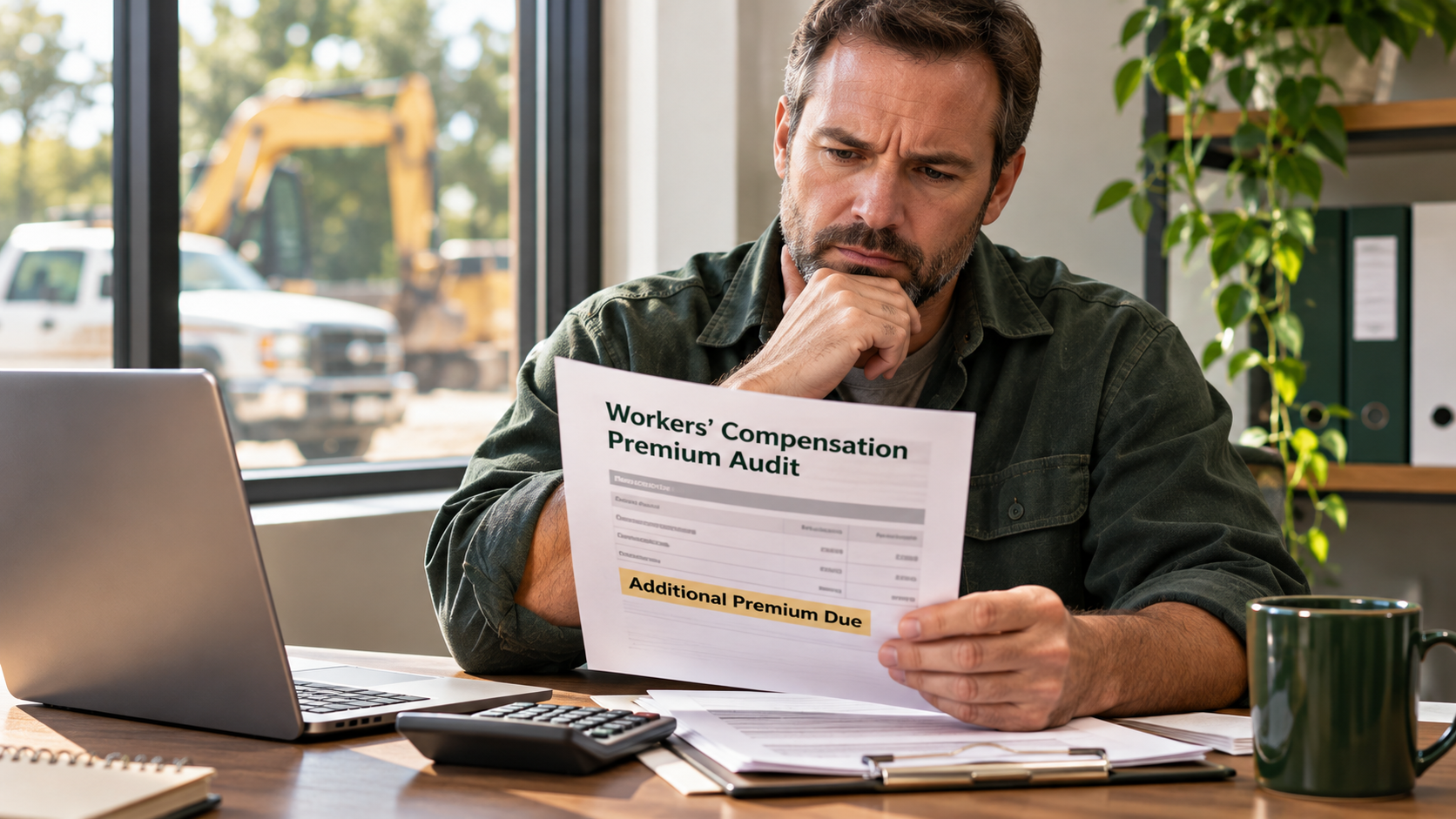
Why Did My Workers' Comp Audit Result in a Bill?

Business Insurance Rates: Should You Shop Before Renewal?
What Goes Into a Business Insurance Quote?

2027 Business Budget Planning: Review Your Risks

Commercial Fleet Safety Tips for the Holiday Season
Let’s Build Your Protection Strategy