Does Your Business Insurance Cover Enough?

You have business insurance.
Your premiums are paid. Your policies are active. Your certificates are available when customers request them.
So your business is protected...right?
The answer isn't always as simple as it seems.
One of the biggest mistakes a business owner can make is assuming that having insurance means every potential loss is covered. Insurance policies are designed around specific risks, limits, exclusions, endorsements, locations, property, and operations. As your business changes, the protection you originally purchased may no longer align with the company you're operating today.
That's why a strong insurance strategy starts with understanding your risk—not simply checking whether a policy exists.
How Do Business Insurance Gaps Develop?
Coverage gaps don't always happen because someone made a bad decision.
Often, they develop gradually.
Maybe you purchased another $75,000 worth of equipment but never updated your property values. Perhaps employees started using their personal vehicles to make deliveries. Your company could have added a new service, begun storing customer information online, hired subcontractors, or signed contracts with new insurance requirements.
Individually, these changes may seem routine.
Collectively, they can significantly change your company's risk profile.
A policy designed for your business two or three years ago shouldn't automatically be assumed to provide the right protection for your business today.
1. Would Your Property Limits Actually Replace What You Own?
Start with your physical assets.
If a fire, severe storm, or other covered event caused a major loss tomorrow, how much would it actually cost to replace your building, equipment, furniture, inventory, and other business property?
That number isn't necessarily the same as what you originally paid.
Construction costs change. Equipment becomes more expensive. Businesses accumulate assets.
Property limits should therefore be reviewed against current replacement costs, not simply historical purchase prices.
2. Has the Way You Operate Changed?
Insurance companies evaluate businesses based partly on what those businesses actually do.
If you've added services, entered new markets, taken on larger projects, started making deliveries, expanded your service territory, or changed how employees perform their jobs, your exposures may have changed too.
This is why seemingly small operational changes should be discussed with your Risk Advisor.
Your insurance program needs to reflect your actual operations—not an outdated description of them.
3. Are Employees Creating Risks You Haven't Considered?
Hiring employees changes more than payroll.
Your organization may now have additional exposures involving workers' compensation, employment practices, cybersecurity, vehicles, workplace injuries, and management responsibilities.
Consider something as simple as an employee driving their personal car to pick up supplies.
That routine errand introduces an auto liability exposure even though your company may not own the vehicle.
Risk assessments help uncover these less obvious connections.
4. What Happens If Your Business Can't Operate?
Property insurance may help repair covered physical damage, but repairing the building doesn't immediately restore lost revenue.
Ask yourself:
How long could my business survive if we couldn't operate normally?
A major fire, equipment breakdown, cyber incident, or other disruption could affect revenue while expenses such as payroll, rent, loan payments, and other obligations continue.
Business interruption and continuity planning should therefore be evaluated alongside physical property protection.
5. Does Your Cyber Coverage Match Your Actual Technology?
Technology can change faster than insurance policies.
Your company may now use cloud software, online payment systems, remote employees, AI applications, customer databases, or third-party technology providers that weren't part of your operations when coverage was originally purchased.
Cybersecurity practices and cyber insurance should evolve alongside those changes.
The question isn't simply, “Do we have cyber insurance?”
It's, “What could actually happen to our business through technology, and how prepared are we?”
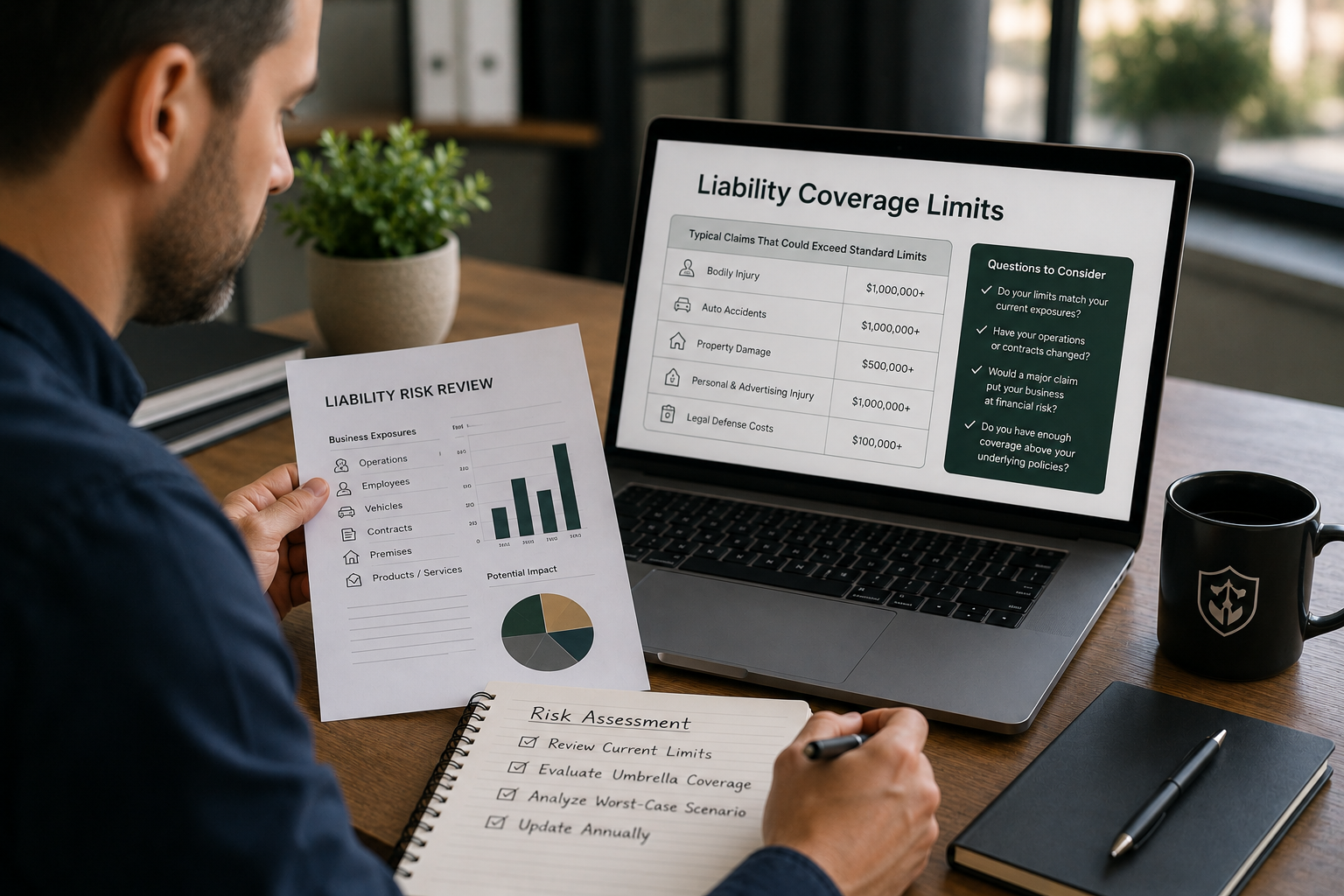
6. Could a Serious Claim Exceed Your Liability Limits?
Liability limits can look substantial on paper—until you consider a severe accident.
A serious commercial auto accident, major customer injury, property damage event, or lawsuit could potentially create costs exceeding the limits of an underlying policy.
As revenue, contracts, vehicles, employees, customers, and assets grow, liability limits should be reevaluated as part of the bigger picture.
Insurance Should Follow the Risk
A comprehensive risk assessment isn't designed to find reasons for you to purchase every type of insurance available.
In some cases, the best solution may be insurance.
In others, proactive risk mitigation may involve stronger contracts, employee training, cybersecurity controls, safer driving procedures, vendor diversification, equipment maintenance, or better business continuity planning.
Usually, the strongest strategy combines several approaches.
That's the difference between simply purchasing policies and building an intentional risk-management program.
When Was Your Last Real Insurance Review?
A renewal shouldn't only answer:
“What is my premium this year?”
It should also answer:
“What has changed?”
If your last insurance conversation focused primarily on price, it may be time for a deeper review.
Your business deserves an insurance strategy built around the company you operate today—and the risks that could affect where you're going next.
Let's Take a Closer Look at Your Risk
You shouldn't have to discover a coverage gap after a claim occurs.
Contact a Fortis Risk Advisor to schedule a comprehensive policy and risk review. We'll take the time to understand your operations, identify potential exposures and coverage gaps, and help you develop a proactive risk-management strategy designed around your business—not simply a collection of insurance policies.
Latest insights and trends




Let’s Build Your Protection Strategy