Growing Business? When to Increase Insurance Limits

My Business Is Growing. When Should I Increase My Insurance Limits?
More customers. More employees. Larger contracts. New equipment.
Growth is exactly what most business owners work toward, but every new milestone can also change the amount and type of risk your company carries.
One of the most common insurance mistakes a growing business can make is allowing its coverage to remain relatively unchanged while the company itself becomes larger and more complex.
Your insurance program may have been appropriate when your company had five employees, two vehicles, and $1 million in annual revenue. But what happens when you have 15 employees, six vehicles, significantly more equipment, and twice the revenue?
The question isn't simply, “Do I still have insurance?”
It's “Does my insurance still match my business?”
When Should a Growing Business Review Its Insurance?
There isn't one universal revenue number, employee count, or growth percentage that automatically means every business needs higher limits.
Different industries create different exposures.
Instead, insurance reviews should be triggered by meaningful changes in the way your business operates.
Here are some of the most important milestones to watch.
1. Your Revenue Has Increased Significantly
Revenue isn't the only factor insurers consider, but substantial growth can be a sign that other exposures have increased too.
Higher revenue may mean:
- More customers
- More transactions
- Larger projects
- Greater production
- Increased inventory
- More contractual obligations
If your revenue has changed significantly since your policy was written, it's worth discussing with your Risk Advisor.
2. You've Added Employees
Hiring is another major growth milestone.
New employees can affect workers' compensation payroll estimates, employment practices exposures, cybersecurity, management responsibilities, and even commercial auto risk.
Pay particular attention when employees' responsibilities change.
Someone who previously worked exclusively in an office but now visits jobsites or drives for company business may create exposures that weren't contemplated when your policies were originally structured.
3. You've Purchased Equipment or Increased Inventory
Growing companies invest in themselves.
Maybe you've purchased new machinery, computers, tools, furniture, or specialized equipment. Perhaps your warehouse now carries significantly more inventory than it did last year.
Ask yourself:
If a major covered loss happened tomorrow, would the limits on our policy realistically replace what we own today?
Replacement cost can be very different from the original purchase price, particularly as equipment, materials, and construction costs change.
4. You've Added Vehicles or Drivers
Commercial auto exposure can change quickly.
Adding trucks, vans, trailers, sales vehicles, or new drivers should trigger a conversation with your Risk Advisor.
But don't overlook employees using their personal vehicles for company business.
Client visits, deliveries, supply runs, and trips between locations can introduce additional liability exposures even when the business doesn't own the vehicle being driven.
5. You're Signing Larger Contracts
Landing a major client or project is exciting.
It's also an ideal time for an insurance review.
Contracts may require higher liability limits or specific insurance provisions. More importantly, a larger project can simply create greater financial consequences if something goes wrong.
Your insurance strategy should account for both contractual requirements and the actual risk associated with the work.
6. You've Opened or Expanded a Location
A larger facility or additional location can affect property values, equipment, inventory, general liability, business interruption exposure, and other areas.
Don't assume an existing policy automatically accounts for a new location.
Talk with your Risk Advisor before—or as early as possible during—the expansion process.
7. Your Business Has More to Lose
There's another factor that's easy to overlook.
As your business grows, the value you've built grows too.
Your company may now own more assets, generate more income, employ more people, and support more customers and families than it did several years ago.
That makes protecting the business increasingly important.
A serious liability claim that may have been devastating to your younger company could now involve significantly larger exposures.
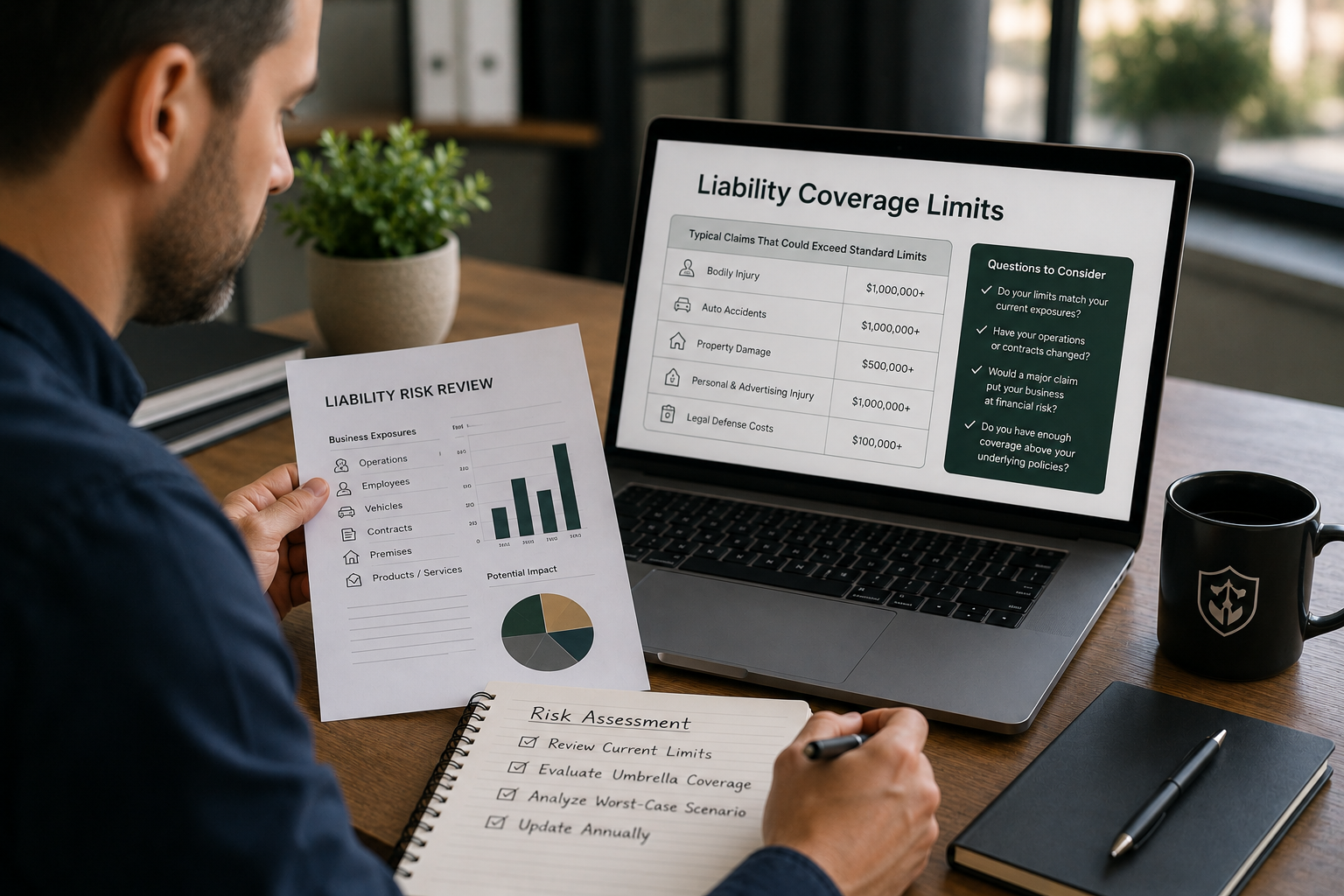
This is where reviewing underlying liability limits and potentially commercial umbrella or excess liability coverage can become part of the conversation.
Higher Limits Aren't Always the Only Answer
A risk assessment shouldn't automatically end with “buy more insurance.”
Sometimes growth reveals opportunities for proactive risk mitigation instead.
Your business may benefit from stronger contracts, updated employee training, improved fleet policies, better cybersecurity controls, stronger vendor requirements, improved safety procedures, or a more comprehensive business continuity plan.
Insurance is one tool within a larger risk-management strategy.
The goal is to determine which risks should be prevented, reduced, transferred, insured, or accepted.
Don't Wait Until Renewal to Talk About Growth
Your business doesn't only change once a year.
Neither should your risk assessment.
If you experience a significant change during the policy period, contact your Risk Advisor rather than automatically waiting for renewal.
The sooner your insurance strategy reflects your actual operations, the less likely you are to discover an important gap when you need your coverage most.
Is Your Insurance Keeping Up With Your Success?
Growth should be something your business celebrates—not something that quietly creates new vulnerabilities.
If your company has added revenue, employees, equipment, vehicles, locations, services, or larger contracts, it's time to make sure your insurance program has grown with you.
Contact a Fortis Risk Advisor for a comprehensive policy and risk review. We'll evaluate how your business has changed, identify new or increased exposures, review your current limits, and help you build a proactive risk-management strategy designed to protect what you're building next.
Latest insights and trends




Let’s Build Your Protection Strategy