SEO Title: Employees Using AI? 5 Business Risks to Review Now
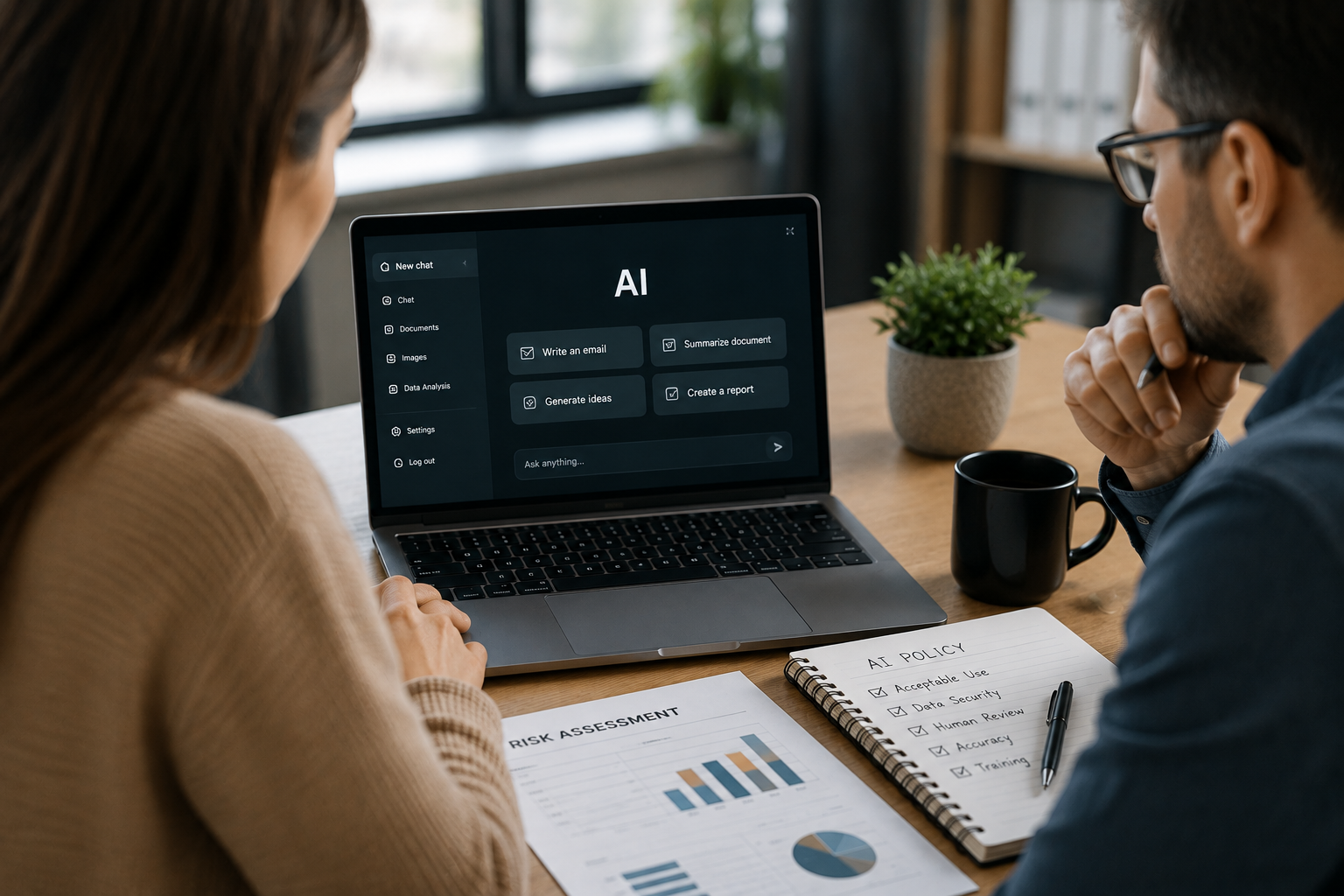
Your Employees Are Using AI at Work. Has Your Risk Assessment Caught Up?
Artificial intelligence is quickly becoming another everyday business tool.
Employees are using AI to draft emails, summarize meetings, create marketing materials, analyze spreadsheets, research customers, write proposals, generate reports, and automate routine tasks.
For businesses, these tools can create tremendous opportunities for efficiency.
But they also create an important question:
Do you know exactly how AI is being used inside your business—and what information your employees are giving it?
For many small businesses, AI adoption has happened faster than their internal policies, cybersecurity practices, and insurance reviews. That creates a new category of risk that deserves attention.
1. Employees May Be Sharing Sensitive Information
One of the first areas businesses should evaluate is data privacy.
An employee trying to save time might copy information into an AI platform without realizing they're potentially sharing confidential business or customer information with a third-party service.
That information could include:
- Customer records
- Financial information
- Employee information
- Contracts
- Internal reports
- Proprietary business information
- Personally identifiable information
Before employees use AI tools with business data, companies should understand the platform's privacy, security, and data-retention practices.
2. AI Can Be Confidently Wrong
AI-generated information can sound polished and authoritative even when it's inaccurate.
That's particularly concerning when employees use AI to create client recommendations, contracts, financial information, technical documents, or other professional work.
Businesses should establish clear expectations for human review.
AI can assist with a task, but someone qualified should remain responsible for reviewing important information before it reaches a customer, vendor, employee, or the public.
3. Cybercriminals Are Using AI Too
Businesses aren't the only ones benefiting from artificial intelligence.
Criminals can use AI to create more convincing phishing emails, impersonate executives, generate fake documents, and potentially clone voices.
Imagine an employee receiving a phone call that sounds like the owner of the company urgently requesting a wire transfer.
Would your employee verify the request—or trust the familiar voice?
Existing fraud-prevention procedures may need to evolve as impersonation becomes more sophisticated.
4. Who Has Permission to Let AI Take Action?
There's an important difference between asking AI to draft an email and allowing an AI-powered system to perform actions inside your business.
As companies begin using more automated AI tools, those systems may have access to email, customer databases, cloud files, calendars, financial systems, or other applications.
Businesses should know:
- Which AI tools are connected to company systems
- What information they can access
- What actions they're authorized to perform
- Who approved those permissions
- How access can be removed
AI access should be treated like any other technology permission within your organization.
5. Your Insurance Strategy May Need Another Look
AI-related incidents don't necessarily fit neatly into a single insurance category.
Depending on the circumstances, an incident could potentially involve cyber liability, professional liability, employment practices, general liability, crime coverage, or another part of your insurance program.
Coverage depends on the specific policy, endorsements, exclusions, and circumstances surrounding a claim.
That's why AI should be part of your broader business risk assessment—not treated solely as an IT issue.
Create an AI Policy Before You Need One
Small businesses don't necessarily need a complicated 50-page AI manual.
Start with a few practical questions:
- Which AI tools can employees use?
- What information should never be entered?
- Which AI-generated work requires human review?
- Who approves new AI applications?
- How should suspicious AI-generated communications be verified?
Clear expectations can reduce uncertainty while still allowing your team to benefit from new technology.
AI Is Changing. Your Risk Strategy Should Too.
Artificial intelligence can be an incredibly useful business tool. The goal isn't to avoid it.
The goal is to use it intentionally.
Proactive risk mitigation means understanding emerging exposures before they turn into claims. As AI becomes embedded into everyday operations, businesses should make AI governance, cybersecurity, employee training, and insurance reviews part of that conversation.
Has Your Business Discussed AI Risk?
If your employees are already using AI—or you're planning to introduce more AI-powered tools—now is the time to evaluate how those changes affect your overall risk profile.
Contact one of the Risk Advisors at Fortis Risk Group for a comprehensive policy and risk review. We'll help you evaluate emerging technology exposures, identify potential coverage gaps, and ensure your insurance strategy continues to evolve alongside your business.
Latest insights and trends




Let’s Build Your Protection Strategy